Thread Profile Guide: 60° V, 55° Whitworth, Trapezoidal & Round
The thread profile is a core geometric element in mechanical connection and transmission design, directly affecting strength, sealing, friction and load capacity. Common profiles include the 60° V (ISO / UN), 55° Whitworth, trapezoidal (Tr / ACME) and round thread, each with its own standard for angle and crest/root radius. Choosing the right profile improves accuracy, extends life and ensures structural reliability.
1. Thread Profile Basics
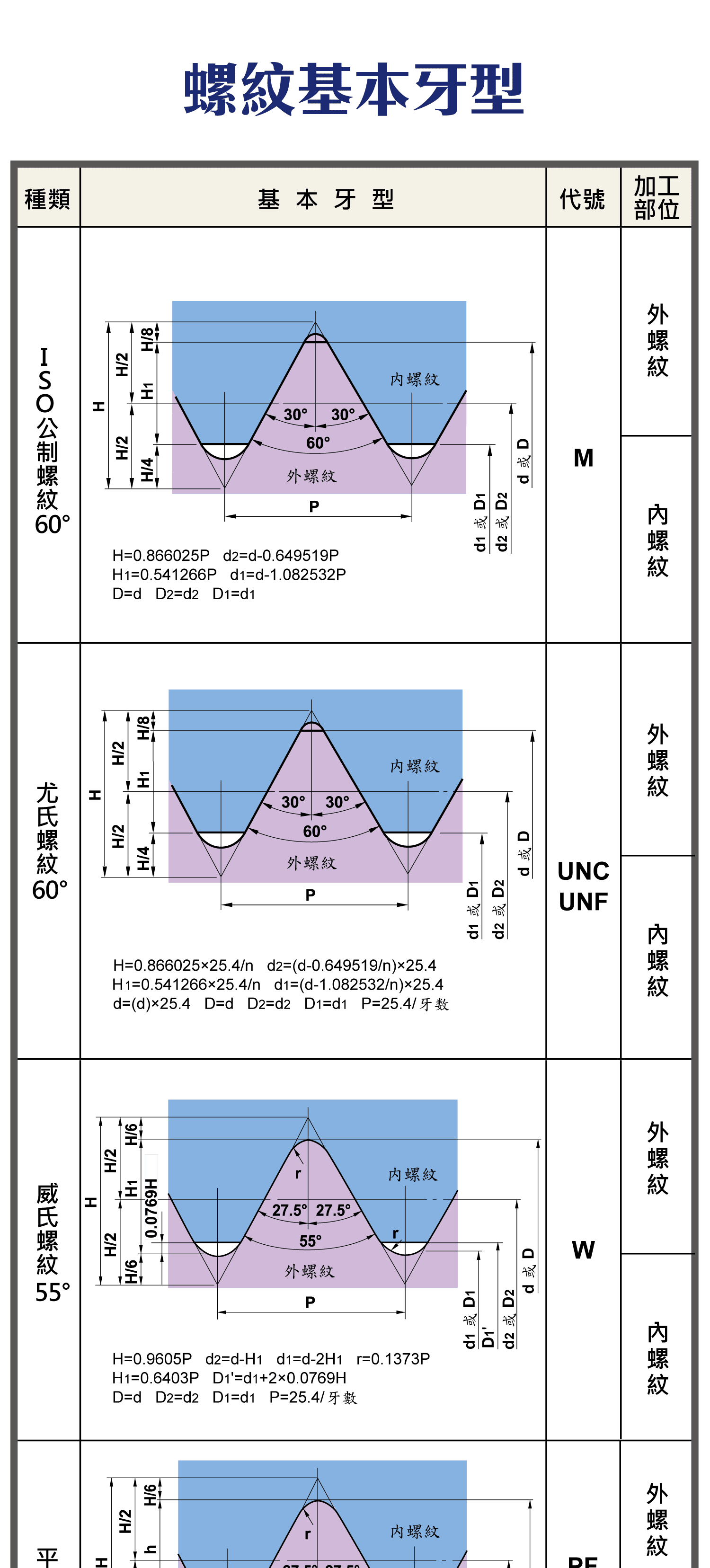
The thread profile is the cross-sectional shape of the thread. Its core parameters are the thread angle, pitch (P), height (H), and the crest and root radius.
2. Common Thread Profiles
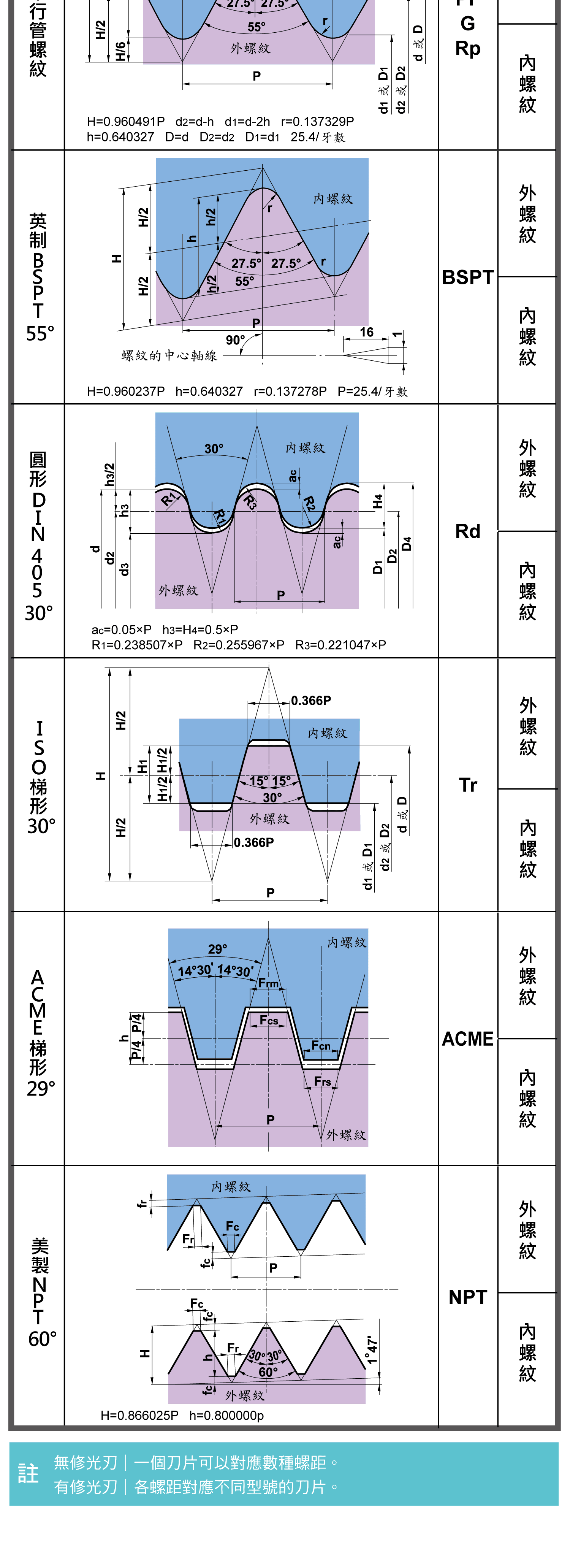
By angle and use, common profiles fall into four groups:
| Profile | Angle | Advantages | Application |
|---|---|---|---|
| 60° V (ISO / UN) | 60° (30°+30°) | Versatile, easy to cut, stable accuracy | Machine structures, bolts & nuts |
| 55° Whitworth | 55° (27.5°+27.5°), rounded crest/root | Lower stress concentration, better fatigue | Inch equipment, pipe connections |
| Trapezoidal (Tr / ACME) | 30° (ISO Tr) or 29° (ACME), flat crest | High load capacity, for transmission | Lead screws, mechanical drives |
| Round thread | Rounded profile | Impact resistant, resists chip clogging | Food equipment, fire equipment |
3. Internal vs External Thread
The same profile differs slightly between internal and external threads; the two must be designed together to ensure clearance fit, sealing and matched strength.
| Type | Location | Profile trait |
|---|---|---|
| External | Cut on the shaft outside | Sharper crest |
| Internal | Cut inside the bore | Rounder root |
4. Profile Geometry Keys
Angle, radius and pitch are the three keys: the angle shapes how load is carried and the use case (the 60° V is versatile; smaller-angle forms such as trapezoidal/ACME use a large symmetric contact face for transmission and load); crest/root radii lower stress concentration and extend life; a larger pitch moves faster, a smaller one positions more precisely.
| Parameter | Effect |
|---|---|
| Thread angle | Larger → strength; smaller → transmission efficiency |
| Radius design | Lowers stress concentration, extends life |
| Pitch | Large → fast move; small → precise positioning |
5. Wiper Note
The wiper affects surface quality and the pitch range a tool can cut: without a wiper, one insert covers many pitches but the surface is rougher; with a wiper, it matches a single pitch with a better surface.
| Type | Trait |
|---|---|
| No wiper | One insert, many pitches; rougher surface |
| With wiper | Single pitch; better surface |
6. Selection and Comparison
Select by need: high accuracy → ISO / UN with a wiper; high strength → Whitworth (rounded); transmission → trapezoidal / ACME; harsh environments → round thread. For machining parameters, see the External Thread Machining Guide and Internal Thread Machining Guide; for a full type overview, see the Thread Types Guide.
| Type | Angle | Trait | Use |
|---|---|---|---|
| ISO / UN | 60° | General | Screws |
| Whitworth | 55° | Fatigue-resistant | Pipe fittings |
| Tr / ACME | 30° / 29° | Transmission | Screws/lead screws |
| Round | Curved | Impact resistant | Food equipment |
FAQ
Q: 60° V vs 55° Whitworth — what's the difference?
The 60° V (ISO/UN) has a larger angle, high versatility, easy machining and stable accuracy — the most common structural thread; the 55° Whitworth has rounded crest and root, lowering stress concentration for good fatigue resistance, common in inch equipment and pipe connections.
Q: Which profile for transmission?
Use a trapezoidal thread (ISO Tr 30° or ACME 29°) with a flat crest and high load capacity, suited to lead screws and mechanical drives. The smaller angle helps transmission efficiency, and its symmetric large contact face provides high load capacity for lead screws and drives.
Q: Are internal and external profiles the same?
The standard is the same, but geometry differs slightly: external threads are cut on the shaft with a sharper crest; internal threads are cut in the bore with a rounder root. They must be designed together for clearance fit, sealing and matched strength.
Q: What's the benefit of crest/root radii?
Crest and root radii lower stress concentration, improving fatigue resistance and life — especially important for connections under alternating loads. Whitworth and aerospace UNJ both use rounded roots to boost fatigue strength.
Last updated: 2026-07-24
For the full reading guide on this topic, see Thread Machining: A Complete Reading Guide.