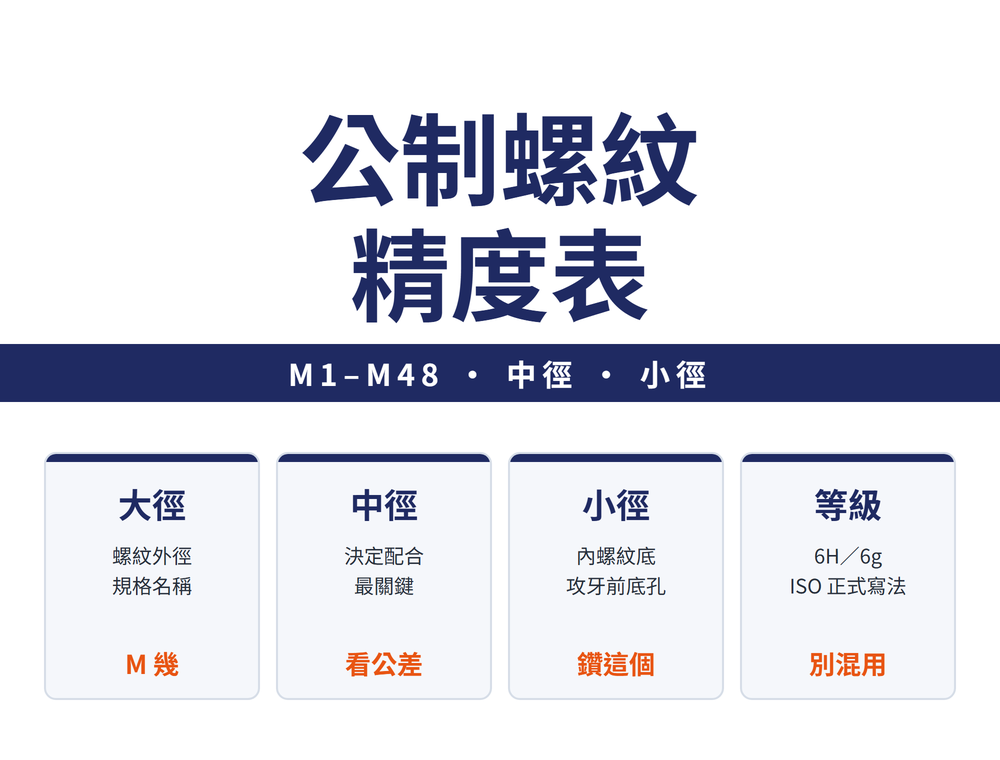
Hole Machining Formula Guide: vc, RPM, Feed & Time
Hole-machining formulas are the foundation of CNC drilling: cutting speed (vc), spindle speed (n), feed rate (vf) and cycle time (Tc). Calculating them correctly raises efficiency, controls tool wear and secures hole quality. This guide covers the four core formulas, the calculation workflow and optimization points, so you can turn material and tool conditions into usable machine settings quickly.
1. Core Parameters and Uses
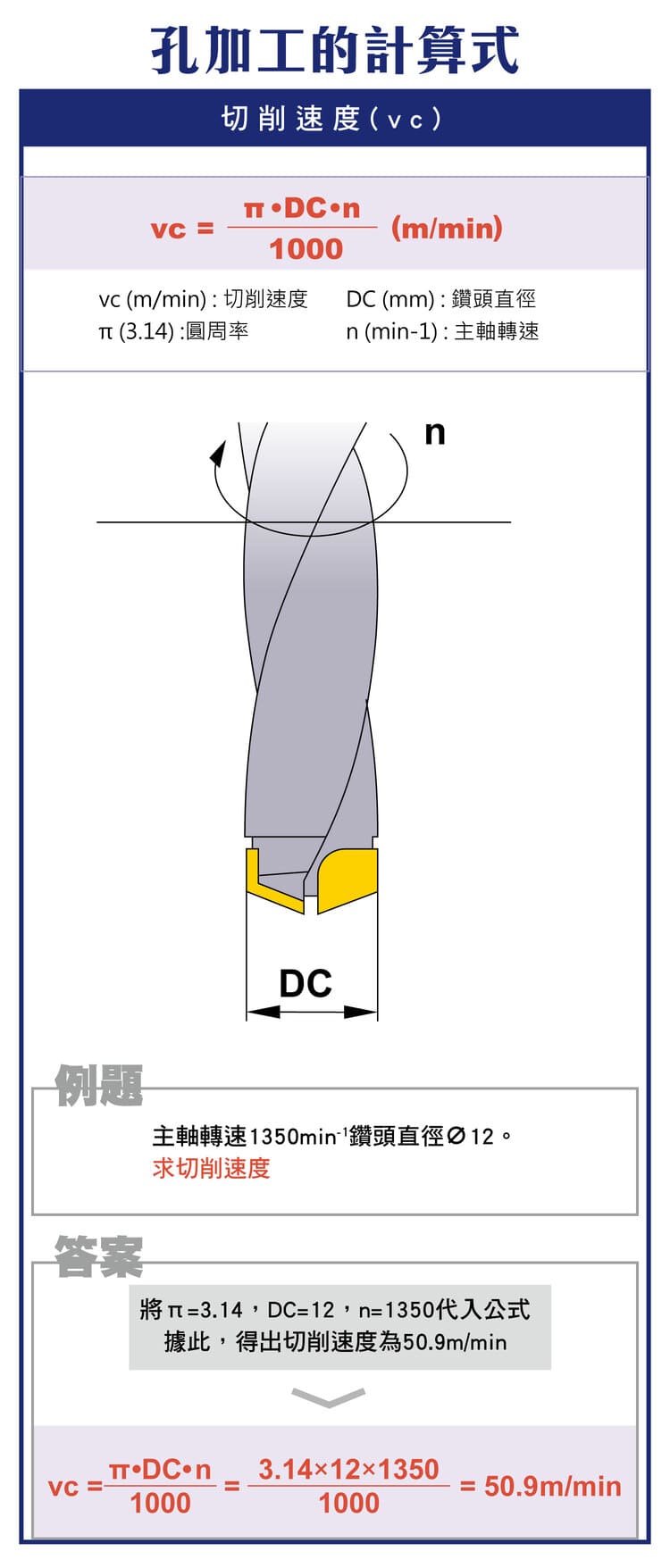
| Parameter | Meaning | Use |
|---|---|---|
| vc | Cutting speed (m/min) | Set conditions, choose tool grade |
| n | Spindle speed (min⁻¹) | CNC rpm setting |
| fr / vf | Feed per rev (mm/rev) / feed rate (mm/min) | Control efficiency and tool life |
| Tc | Cycle time (min) | Time estimation, cost control |
2. Cutting Speed (vc)
vc = π × D × n ÷ 1000
D is drill diameter (mm), n is spindle speed (min⁻¹), π ≈ 3.14. Used to set conditions and select tool material.
3. Spindle Speed (n)
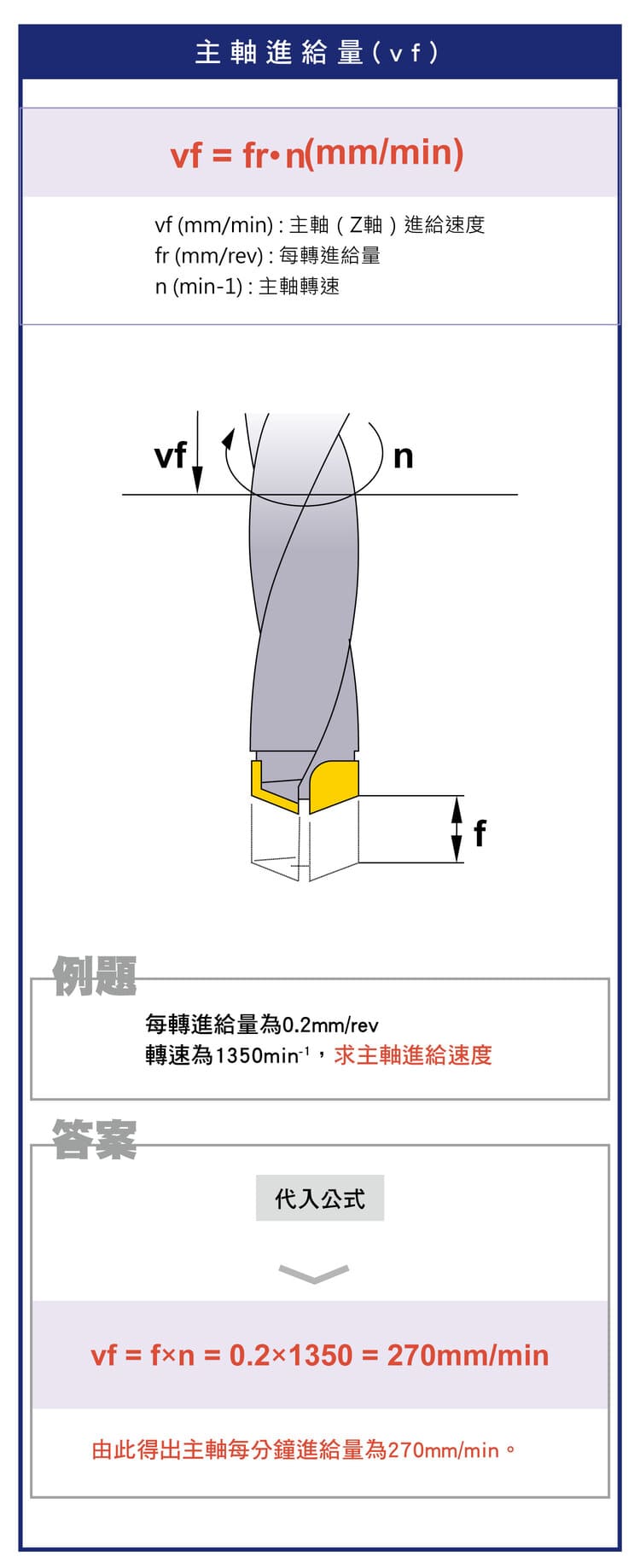
n = (vc × 1000) ÷ (π × D)
Smaller diameter, higher rpm; larger diameter, lower rpm — the key step to turn cutting speed into a settable CNC rpm. For full parameter setting and factor use, see the Drilling Parameters Guide.
4. Feed Rate (vf)
vf = fr × n
vf is feed rate (mm/min), fr is feed per revolution (mm/rev), n is spindle speed. Used to control efficiency and balance tool life.
5. Cycle Time (Tc)
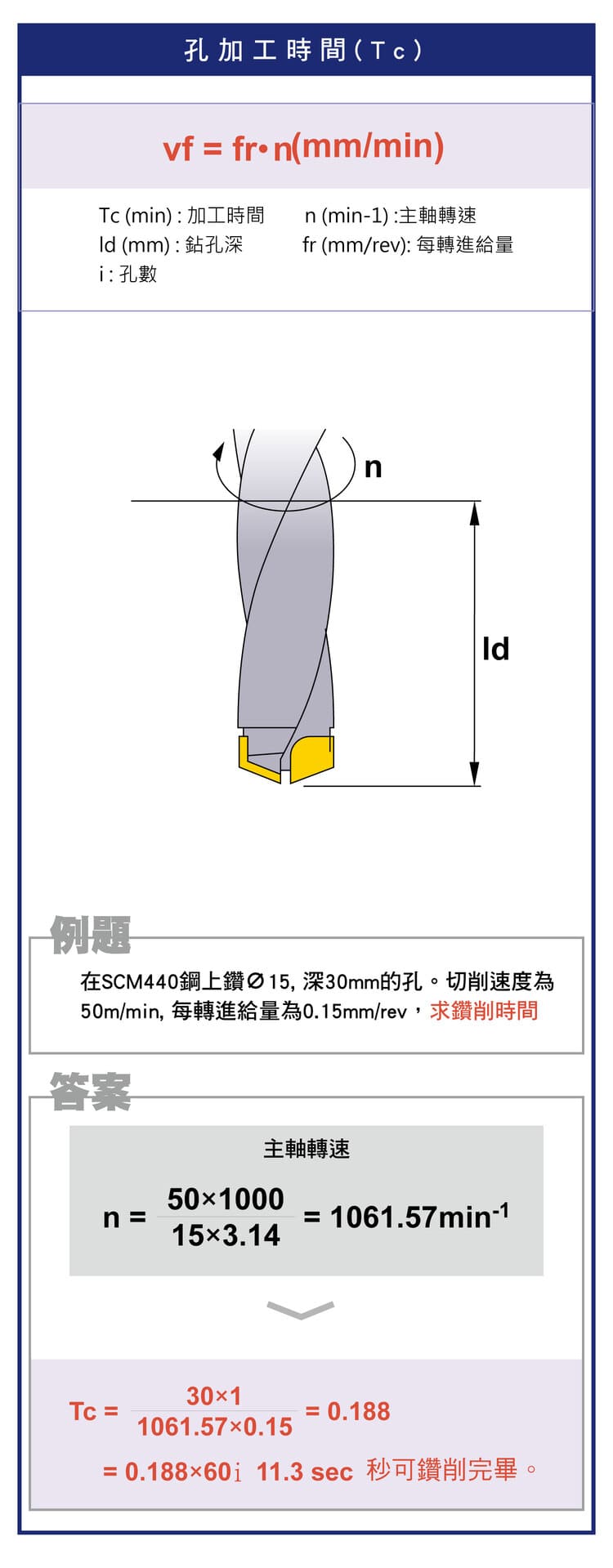
Tc = L ÷ vf = (hole depth × hole count) ÷ vf
L is machining length or total hole depth. Used to estimate production time and control cost.
6. Calculation Workflow
| Step | Action |
|---|---|
| 1 | Choose cutting speed vc (by material) |
| 2 | Compute spindle speed n from diameter |
| 3 | Set feed per rev fr |
| 4 | Compute feed rate vf |
| 5 | Compute cycle time Tc |
7. Optimization Tips
| Aspect | Direction |
|---|---|
| Speed & feed | Higher feed raises efficiency; lower speed reduces wear |
| Tool choice | HSS for medium speed; carbide (tungsten) for high speed |
| Coolant | Internal coolant raises efficiency and cuts heat effects |
Calculated values still need tuning for material, diameter and depth; use chip form as a live indicator — see Drill Chip Formation Guide.
FAQ
Q: How do I calculate cutting speed vc?
vc = π × D × n ÷ 1000, where D is drill diameter (mm) and n is spindle speed (min⁻¹). To solve for rpm instead, use n = (vc × 1000) ÷ (π × D).
Q: What is the difference between vf and fr?
fr is feed per revolution (mm/rev); vf is feed per minute (mm/min); they relate by vf = fr × n. CNC usually sets vf, but tool selection and chip breaking often reference fr.
Q: How do I estimate drilling cycle time?
Tc = L ÷ vf; for multiple holes, Tc = (hole depth × hole count) ÷ vf — useful for quoting and scheduling.
Q: Can I use the calculated values directly?
They are a starting point. Tune for material, diameter, depth and machine rigidity, and adjust by observing chips and tool wear rather than copying values verbatim.
For the full reading guide on this topic, see Machining Calculation Reading Guide.
This article is part of Drill Bits: The Complete Guide - Start From Depth-to-Diameter, Then Pick the Drill and Set the Conditions; that guide shows how the whole topic fits together.