Flat Drill vs Twist Drill vs End Mill: Stability & Application Selection
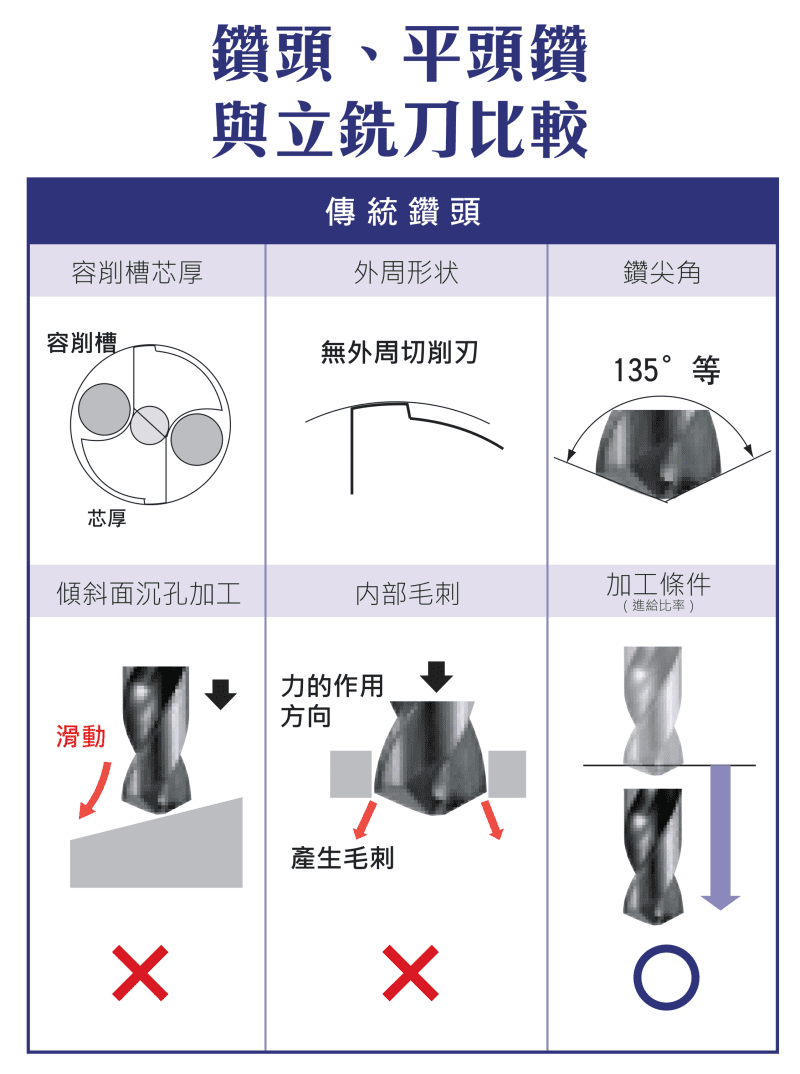
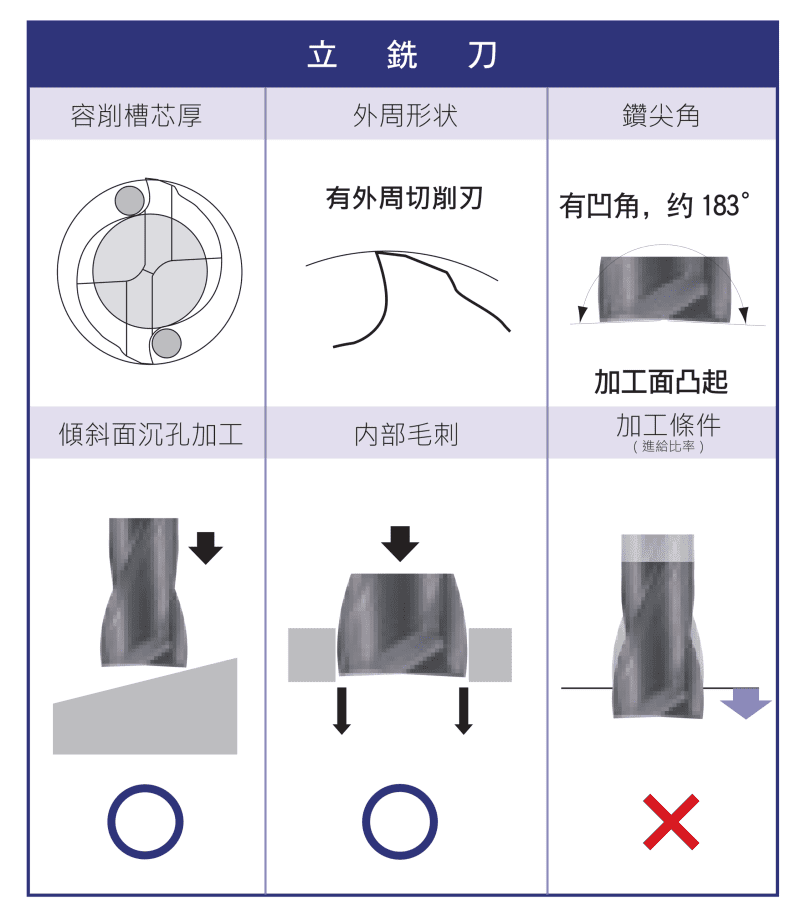
Flat drills, twist drills and end mills differ markedly in machining behavior, especially on inclined surfaces, cutting stability and chip evacuation. A twist drill has no peripheral cutting edge, so it slips and forms burrs on inclined surfaces; an end mill has peripheral edges suited to side cutting but is less stable in hole drilling; a flat drill combines both strengths with stable engagement and good quality, making it ideal for complex hole machining.
Basic Differences of the Three Tools
The fundamental difference is the cutting-edge layout and point geometry.
| Tool | Structure |
|---|---|
| Twist drill | No peripheral edge; axial cutting at the point |
| End mill | Peripheral edges; suited to side (lateral) cutting |
| Flat drill | Special stepped structure combining drill and end mill strengths |
Inclined-Surface Capability & Cutting-Force Direction
Engagement on inclined surfaces and force direction are where the three differ most.
| Tool | Inclined-surface drilling | Cutting-force direction |
|---|---|---|
| Twist drill | Slips easily, unstable cutting | Mainly axial; inclined surface creates a lateral component |
| End mill | Workable but affected by lateral force | Mainly lateral cutting |
| Flat drill | Stable engagement, no slipping; good for inclined surfaces | Stable force, less deflection |
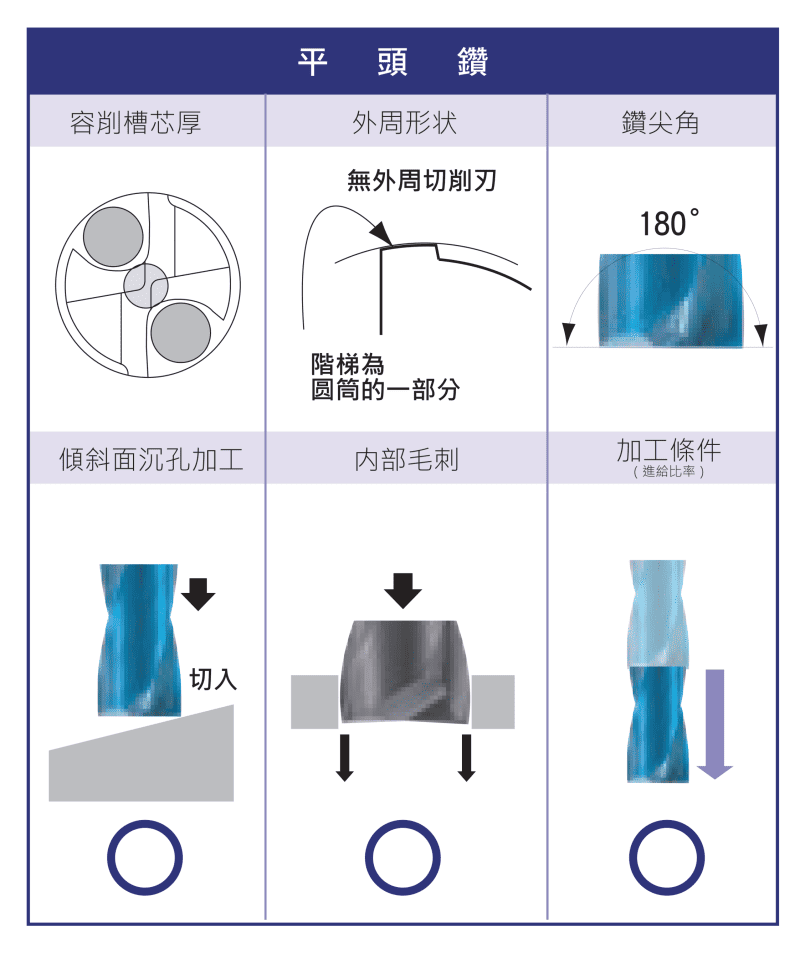
Burrs, Chip Evacuation & Stability
| Tool | Burr & quality | Chip evacuation | Stability |
|---|---|---|---|
| Twist drill | Prone to internal burrs | Good chip evacuation | Stable but condition-limited |
| End mill | Stable surface but poor hole quality | Thick web, small flute, poorer evacuation | Prone to vibration and chipping |
| Flat drill | Few burrs, good quality | Drill-like, good evacuation | Most stable, good for complex work |
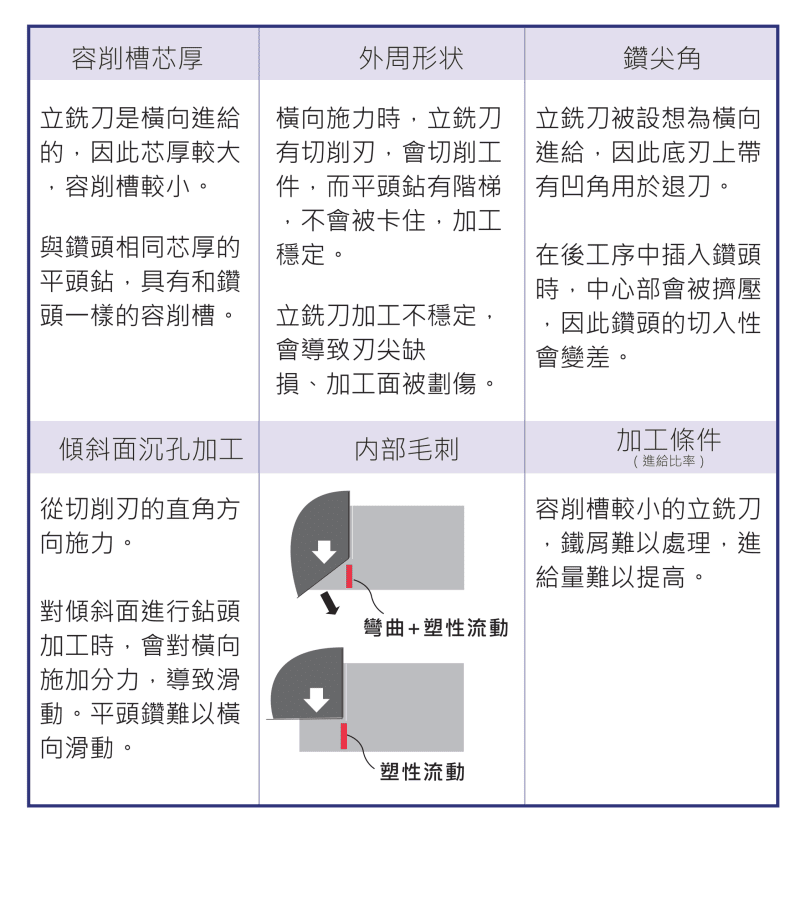
Application Selection
| Requirement | Recommended tool |
|---|---|
| General hole drilling | Twist drill |
| Side milling | End mill |
| Inclined / high-precision holes | Flat drill |
For flat-drill applications see Flat Drill Machining Guide; for drill geometry see Drill Geometry and Function; for end mill shape selection see End Mill Selection Guide. For cutting parameters see Drilling Parameters Guide.
※ These are general trends; actual results depend on workpiece material, machine rigidity, clamping and cutting conditions.
FAQ
Which tool for drilling on an inclined or curved surface?
A flat drill. Twist drills slip and cut unstably on inclined surfaces, while a flat drill engages stably without slipping, ideal for inclined and high-precision holes.
Can an end mill be used to drill holes?
It can do shallow holes or helical ramping, but its thick web, small flute and poor chip evacuation make straight axial drilling unstable with poor hole quality—use a drill for general holes.
How does a flat drill differ from a twist drill?
A twist drill has a conical point that slips on inclines and leaves a conical hole bottom; a flat drill has a stepped structure for flat-bottom holes, stable inclined engagement and fewer burrs, with better quality and stability.
Which is most cost-effective for plain straight holes?
A twist drill—good evacuation, high efficiency and low cost. Upgrade to a flat drill only when you need inclined, flat-bottom or high-precision holes.
For the full reading guide on this topic, see Chip Control: A Complete Reading Guide.
This article is part of Drill Bits: The Complete Guide - Start From Depth-to-Diameter, Then Pick the Drill and Set the Conditions; that guide shows how the whole topic fits together.