Pipe Thread Tolerance Guide: NPS, NPT, NPSF Tolerance & Size
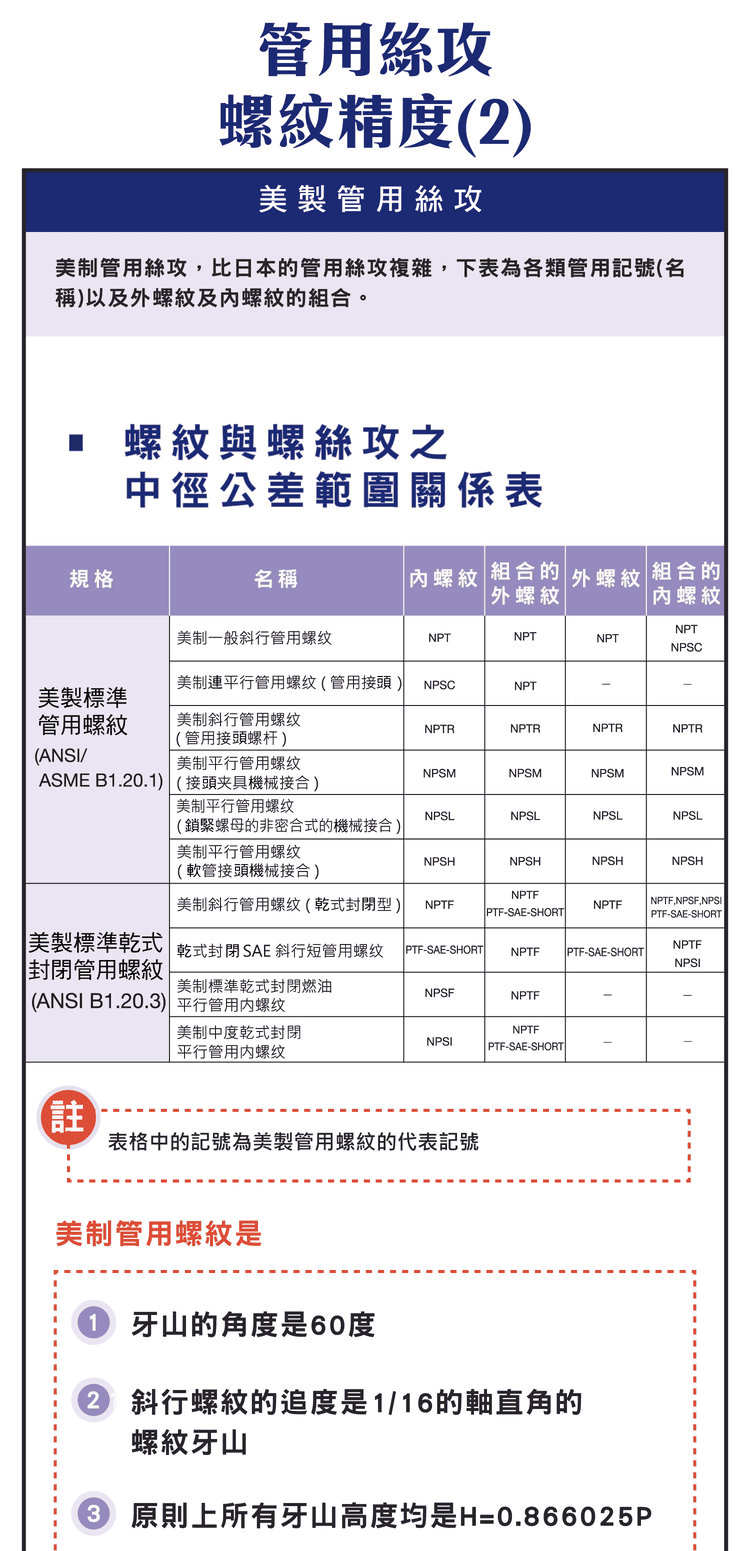
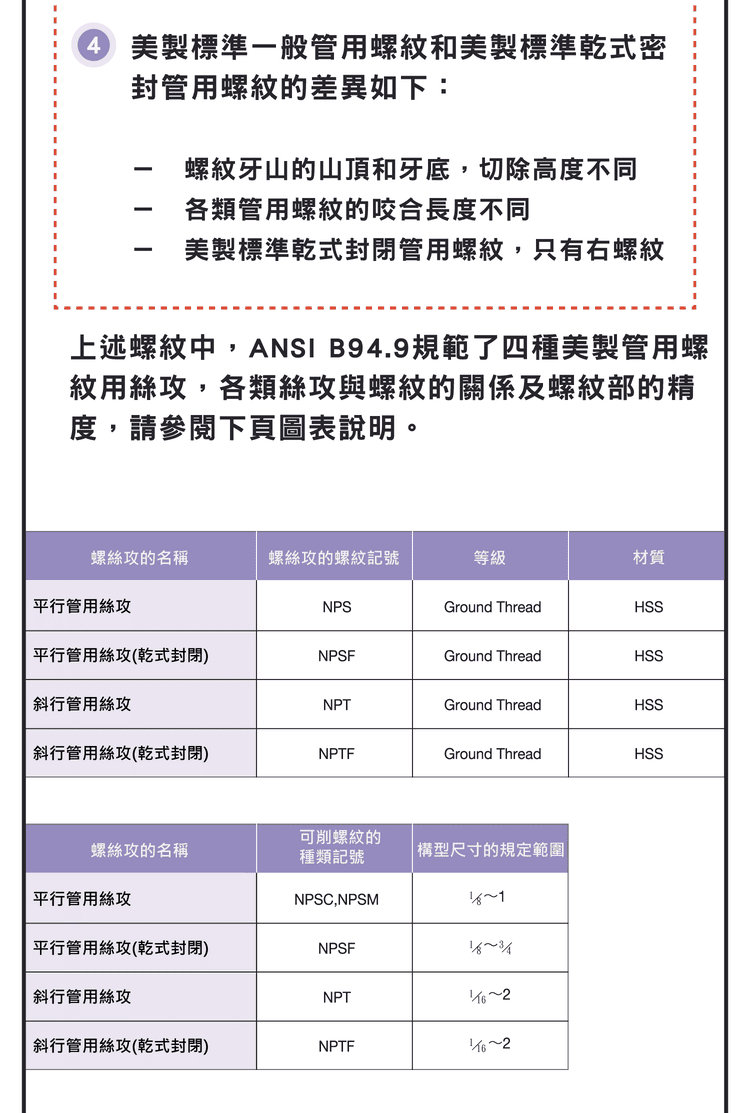
This guide covers US pipe-tap thread accuracy for NPS (parallel), NPT (taper) and NPSF (dry-seal), explaining the 60° form, the pitch formula, taper traits and the tolerance ranges of major, pitch and minor diameters. With accuracy data and geometry, you can precisely control tapping size and sealing — widely used in pneumatic, hydraulic and high-seal pipe machining.
1. US Pipe-Thread Basics
| Item | Value |
|---|---|
| Thread angle | 60° |
| Height formula | H = 0.866025 × P |
| Pitch conversion | P = 25.4 ÷ n (n = TPI) |
2. Pipe-Thread Classes
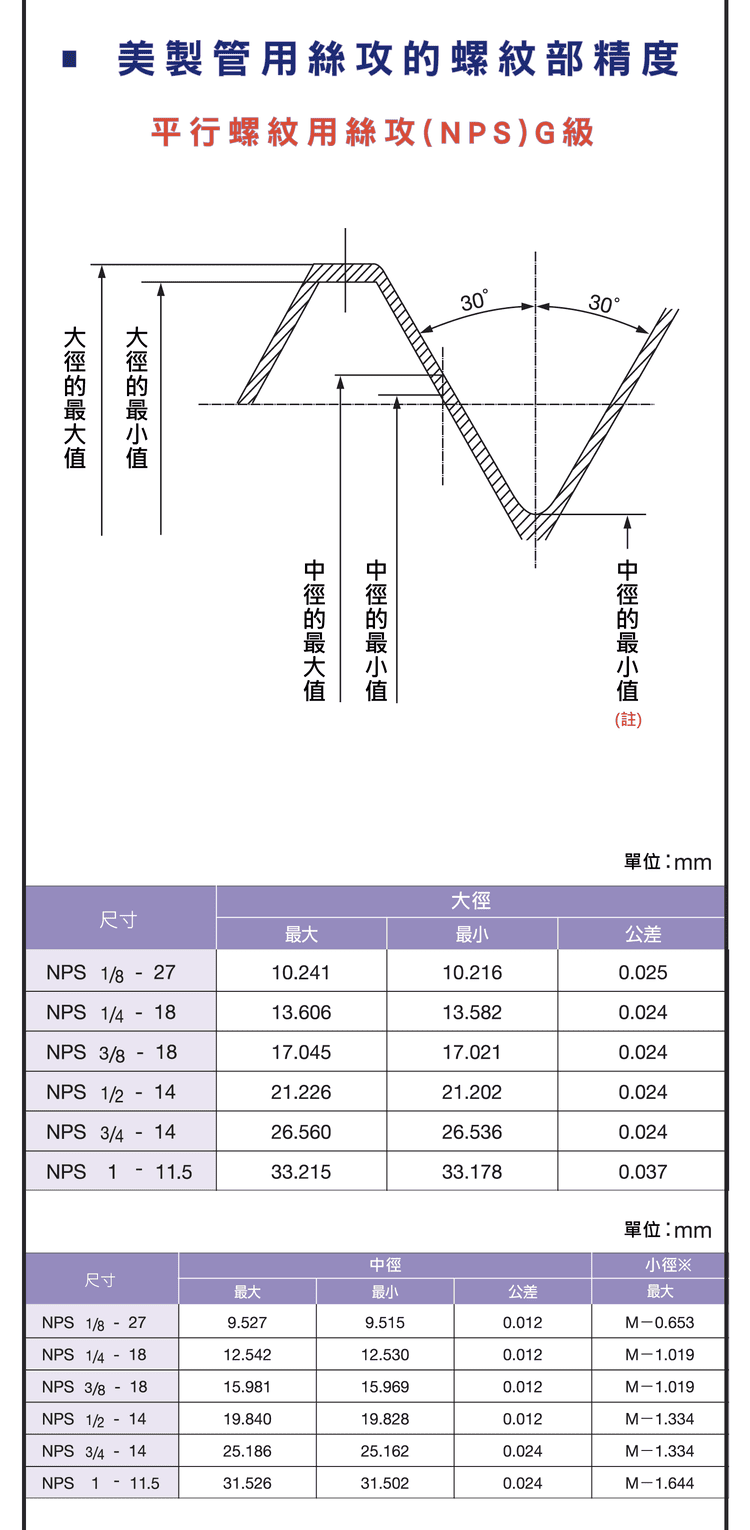
| Type | Traits |
|---|---|
| NPS (parallel) | No taper, mechanical joint; needs a seal |
| NPT (taper) | 1:16 taper, seals; common in piping |
| NPSF (dry-seal) | No sealant needed, seals by form interference |
3. Geometry and Sizes
| Size | Description |
|---|---|
| Major | Outer diameter, sets fit range |
| Pitch | Affects fit accuracy, most critical |
| Minor | Root diameter |
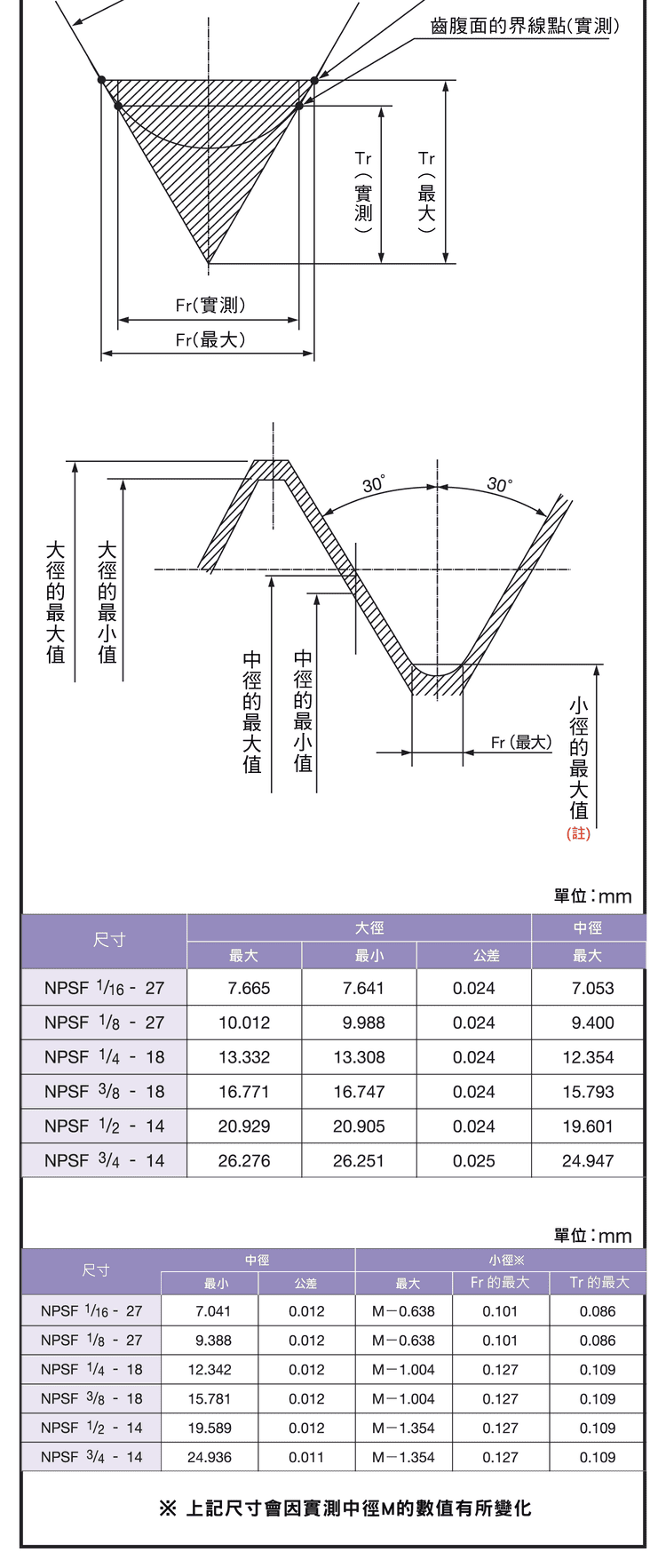
| Fc / Fr / Tr | Crest size / root size / root height |
4. NPS Parallel Accuracy
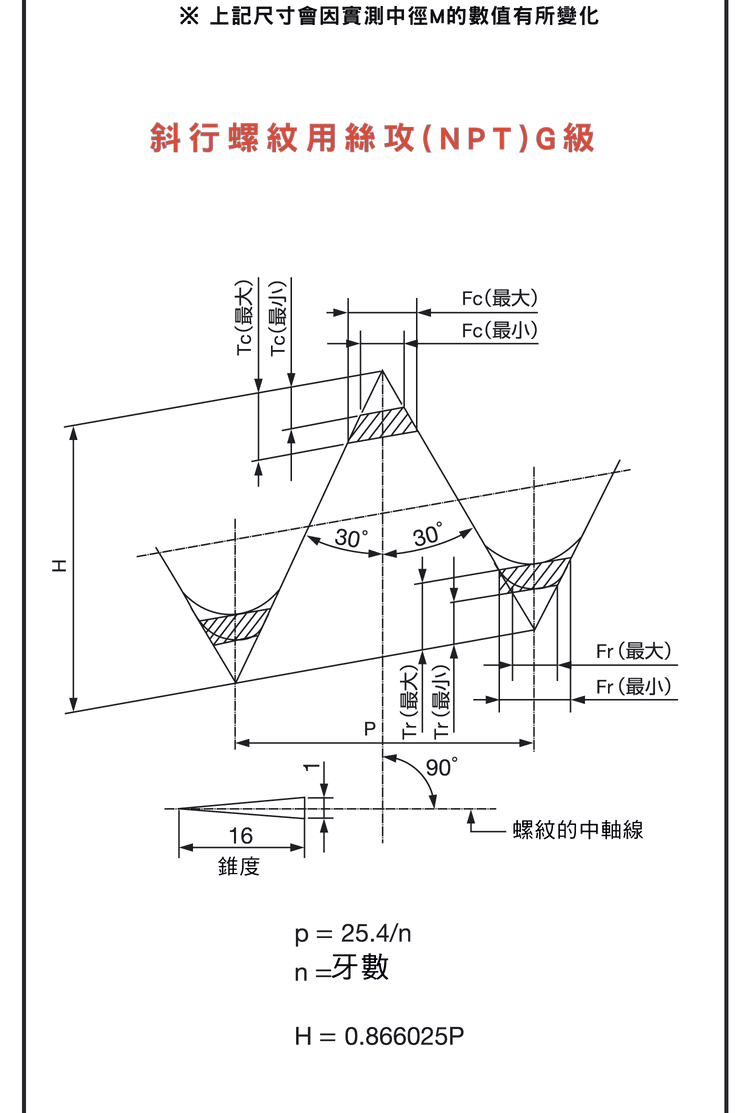
| Item | Tolerance (ref.) |
|---|---|
| Major dia | about 0.024 mm |
| Pitch dia | about 0.012 mm |
| Minor dia | Adjusted by the M value |
For mechanical joints and non-sealing uses.
5. NPT Taper Accuracy
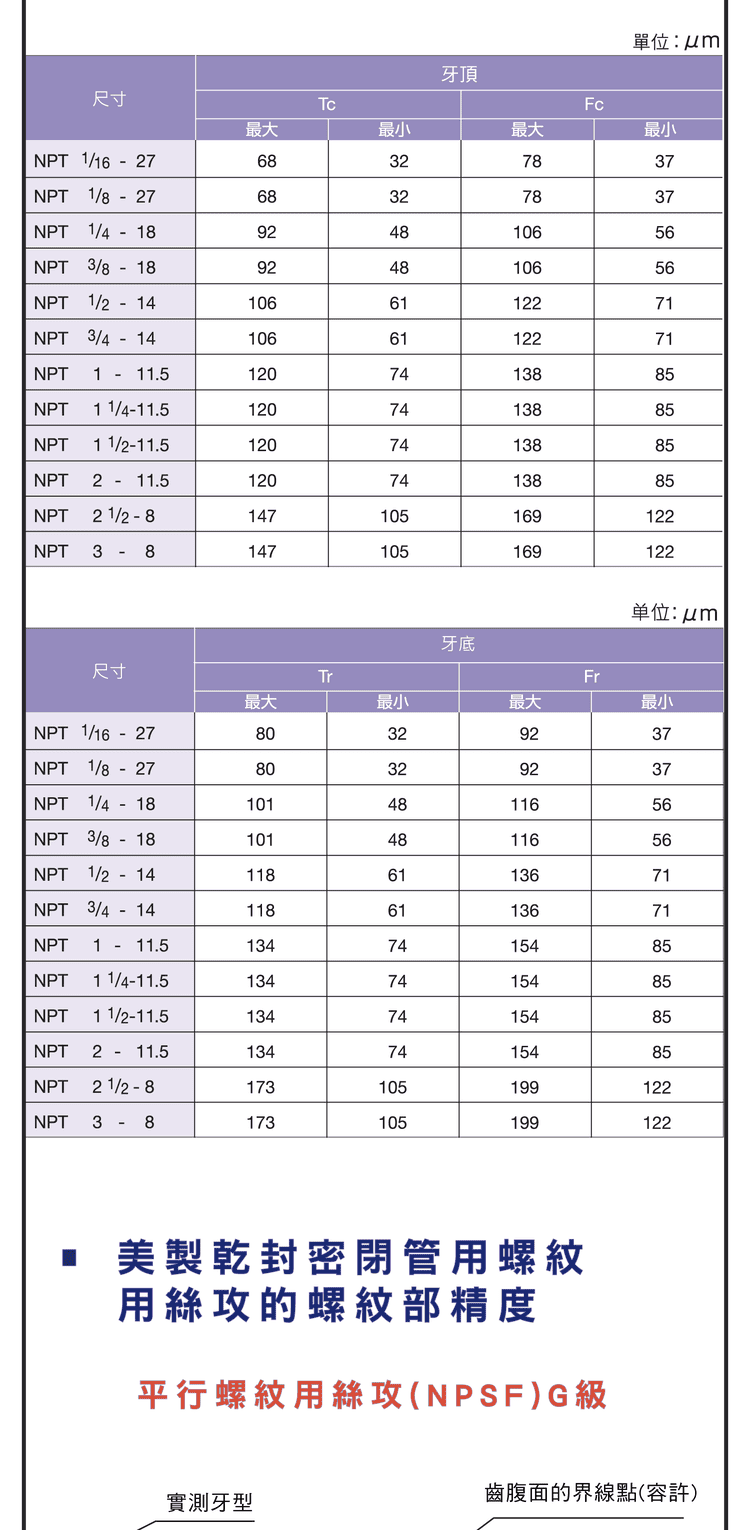
| Item | Tolerance (ref.) |
|---|---|
| Crest Tc | about 68–147 μm |
| Root Fr | about 92–199 μm |
NPT uses a 1:16 taper with good sealing. Per ASME B1.20.1, NPT has equal crest and root truncation (fc = fr); the table's root (Fr) larger than crest (Tc) is actually the NPTF / dry-seal (Dryseal) trait, self-sealing by crest-root metal interference, whereas NPT itself usually needs sealing tape or compound. Crest and root truncation affect sealing, tapping depth and fit.
※ Root larger than crest (crest ≠ root) is the NPTF / dry-seal trait (ASME B1.20.3); NPT (ASME B1.20.1) has crest = root. Values are reference; follow the standard and gauges for actual values.
6. Selection Points
For self-sealing (gas/liquid-tight) use NPT or dry-seal NPSF; for purely mechanical joints use NPS with a gasket. Tapping depth and taper control are key to NPT sealing, while pitch diameter sets overall fit accuracy.
For type comparison see the Pipe Tap Guide; for troubleshooting see the Pipe Tap Troubleshooting Guide; for forms see the Standard Thread Form Guide; for pilot holes see the Special Thread Tap Drill Chart.
FAQ
Q: NPT vs NPS vs NPSF?
NPT is a 1:16 taper that seals by flank interference; NPS is parallel, needs a seal and is mostly for mechanical joints; NPSF is a dry-seal thread whose interference seals without sealant.
Q: What does NPT's 1:16 taper mean?
The diameter changes 1 unit per 16 units of length. As it screws in, the flanks progressively interfere and seal, so tapping depth and taper control directly affect sealing.
Q: Which pipe-thread size matters most?
Pitch diameter is most critical for fit; for NPT also watch crest (Tc) and root (Fr) tolerances, which affect taper contact and sealing. Parallel NPS focuses on major/pitch tolerances.
Q: How to compute pipe-thread pitch?
Use P = 25.4 ÷ n (TPI), with height about H = 0.866025P. These are the base geometry of the 60° form for sizing and machining setup.
Last updated: 2026-07-24
For the full reading guide on this topic, see Thread Machining: A Complete Reading Guide.