Spiral Point Tap Torque: Cutting-Force Comparison
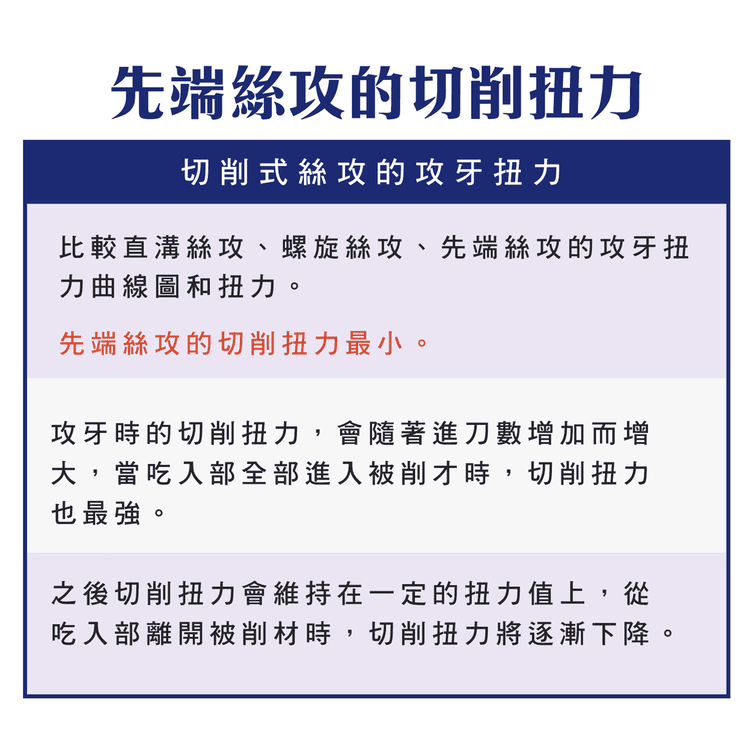
Spiral-point taps have the lowest cutting torque, because chips exit forward and the load is spread, keeping machining stable. Compared with straight-flute and spiral-flute taps, they effectively lower the torque peak and resistance in through holes, extending tool life and efficiency — one of the best choices for CNC tapping and mass production.
1. Torque Basics
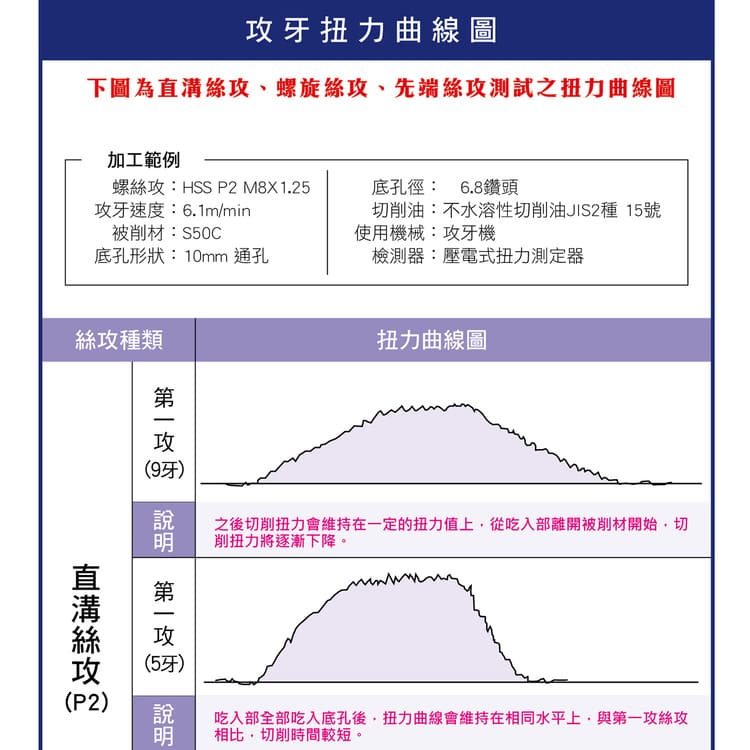
During tapping, cutting torque changes as work proceeds — common to all taps:
| Stage | Torque |
|---|---|
| Start | Entering material, torque rises |
| Middle | All threads engaged, torque peaks |
| End | Exiting material, torque falls |
2. Torque of Three Tap Types
| Tap type | Torque | Evacuation & use |
|---|---|---|
| Straight-flute | Higher | High resistance, unstable chips; general |
| Spiral-flute | Medium | Chips upward; blind holes |
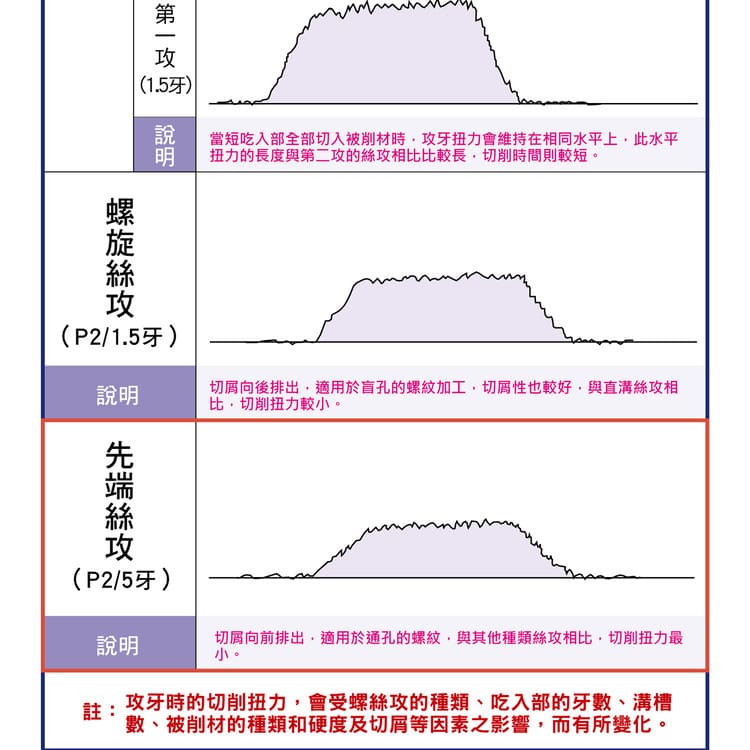
| Spiral-point | Lowest | Chips forward; through holes |
3. Spiral-Point Torque Traits
The spiral-point tap spreads cutting load, gives a smooth torque curve and a lower peak, reducing tool burden, improving stability and lowering breakage risk. Torque is lowest because chips exit forward without piling up, reducing friction and resistance in a continuous cut.
4. Key Factors Affecting Torque
| Factor | Effect |
|---|---|
| Tap type | Straight/spiral/point differ in torque |
| Chamfer length (cutting length) | Longer lead holds torque longer |
| Flute design | Affects evacuation and resistance |
| Workpiece material and hardness | Harder material = higher torque |
| Chip evacuation | Smooth evacuation lowers torque |
5. Application Case (Example)
For medium-carbon steel S50C, about 6 m/min, with an HSS tap (example conditions), the spiral-point tap gives the lowest torque, shorter cycle and best stability. Actual torque varies with material, diameter and machine — use the tapping-torque calculation and maker data for official parameters.
For torque calculation see the Tap Torque Guide; for the concept see the Spiral-Point Tap Guide; for models see the Spiral-Point Tap Series Guide; for cutting vs forming see Cutting Tap vs Forming Tap.
FAQ
Q: Why is spiral-point torque the lowest?
Because chips exit forward without piling up, reducing friction and resistance, and the cut is continuous with spread load — giving a smooth torque curve and lower peak. It's the lowest of the three in through-hole tapping.
Q: When is tapping torque highest?
When all the cutting threads are engaged and the cutting zone is fully in the material; after exiting, torque falls. The longer the chamfer (lead), the longer the peak torque is sustained.
Q: What are the benefits of low torque?
Low torque means less tool burden, lower breakage risk and more stability, allowing higher feed/speed and longer tool life — especially good for high-speed and automated production.
Q: How to reduce excessive torque?
Pick the right tap (spiral-point for through holes), enlarge the pilot hole to a suitable engagement, improve evacuation and cutting fluid, and lower the lead load. See the tapping-torque guide for calculations and parameters.
For the full reading guide on this topic, see Thread Machining: A Complete Reading Guide.