Cutting Tool Material Classification | P M K N S H Guide
The tool material series (P, M, K, N, S, H) is the most important CNC tool-selection logic, matching workpiece materials such as steel, stainless steel, cast iron, non-ferrous metals and heat-resistant alloys. Classifying by carbide, coated carbide, cermet and CBN lets you quickly match the best grade. This guide covers the full series and tool-grade reference. For workpiece grouping itself, see ISO Workpiece Material Classification.
Tool Material Series (ISO Classification)
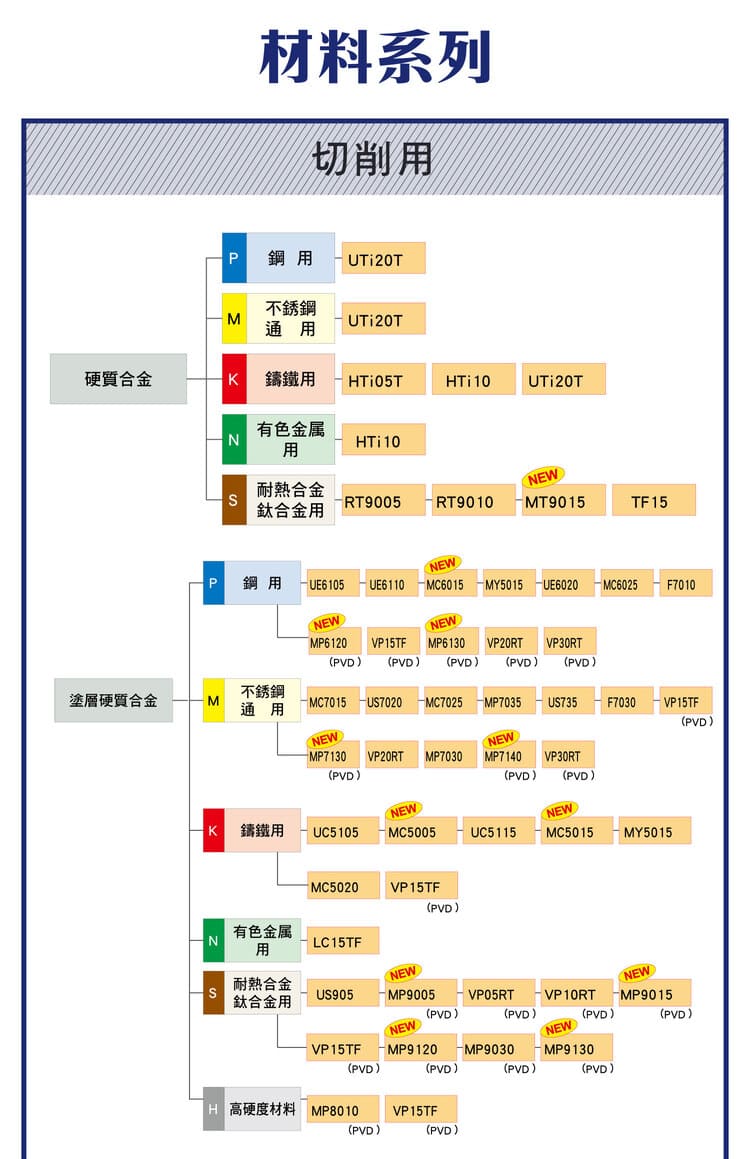
Tool materials split into six series by workpiece; materials, traits and example grades below.
| Series | Material | Trait | Example grades |
|---|---|---|---|
| P (Steel) | Carbon / alloy steel | Stable cutting, broad use | UTi20T, NX2525, NX3035, NX4545 |
| M (Stainless) | Austenitic stainless steel | Gummy, work-hardening | MC7015, MP7035, NX2525, NX4545 |
| K (Cast Iron) | Grey / ductile iron | Brittle, wear-resistant | HTi05T, MC5005, UC5105, NX2525 |
| N (Non-Ferrous) | Aluminum, copper | Low hardness, ductile | HTi10, MD220 (PCD) |
| S (Heat Resistant) | Titanium, nickel-based alloys | High-temp strength | RT9005, MP9015, VP10RT, MP9030 |
| H (Hardened Steel) | Hardened steel | High-hardness machining | MBC010, BC8020 (CBN) |
Tool Material Structure
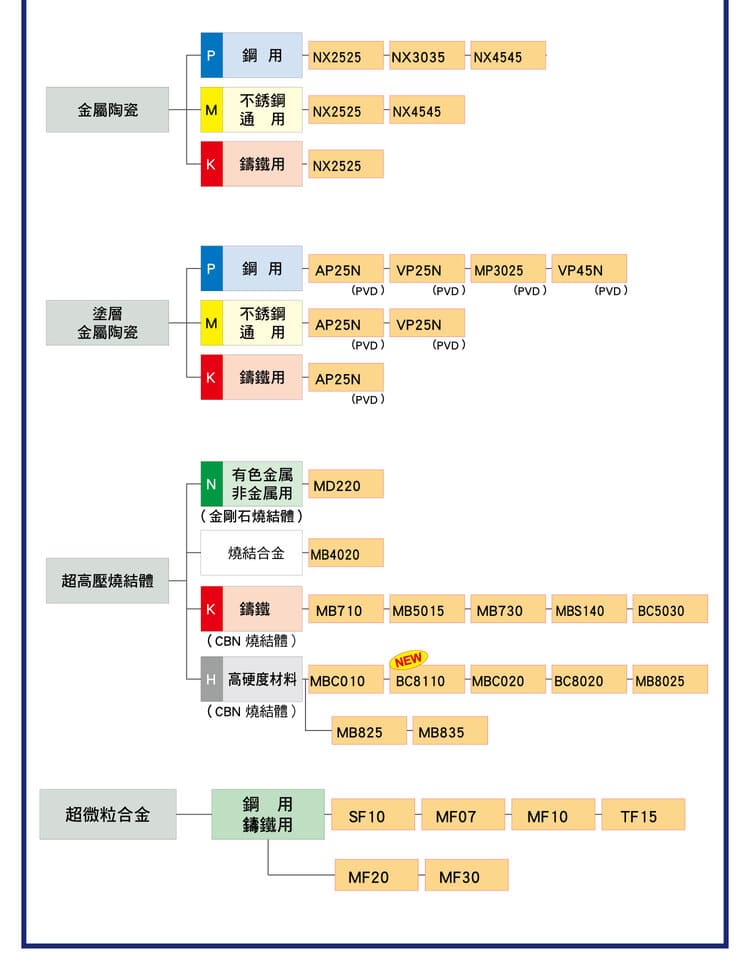
By substrate and process, tool materials further divide as follows.
| Class | Representative / grade | Use |
|---|---|---|
| Carbide series | General UTi, HTi; wear GTi05–GTi40; corrosion GC15–GC30 | General cutting, wear/corrosion duty |
| Coated carbide | PVD: VP series, MP series | High wear resistance, long life |
| Cermet | — | High precision, good surface finish |
| Ultra-high-pressure sintered | CBN (hardened steel), diamond (non-ferrous) | Super-hard and non-ferrous use |
| Ultra-fine grain carbide | — | High toughness, precision machining |
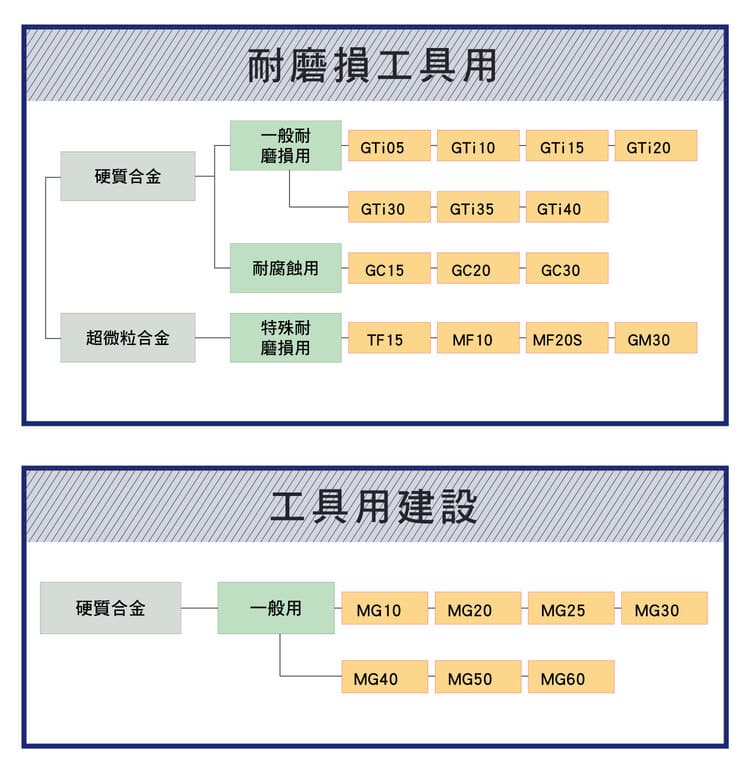
Wear-Resistant Tool Classes & Use Advice
| Use | Grade / series |
|---|---|
| General wear resistance | GTi05–GTi40 |
| Corrosion resistance | GC15, GC20, GC30 |
| Special wear | TF15, MF10, GM30 |
| General machining | MG10–MG60 series |
| High wear machining | GTi series |
| High-precision machining | Cermet |
| High-hardness machining | CBN tools |
CNC Tool-Selection Logic (3 Steps)
| Step | Decision | Mapping |
|---|---|---|
| Step 1 identify material | Workpiece | Steel→P, stainless→M, cast iron→K |
| Step 2 assess conditions | Rough / finish | Roughing→high toughness, finishing→high wear |
| Step 3 choose tool material | Grade | General→carbide, high-speed→coated, super-hard→CBN / diamond |
For per-brand coating (CVD/PVD) grades, see Carbide Insert Coating Chart; for hardness and trait comparison of tool materials, see Cutting Tool Materials Guide. For cutting parameters, see End Mill Cutting Conditions Guide.
※ Grades are examples compiled from the source (mostly a single brand's series) for classification and selection reference only; verify exact grades and applicability against each brand's catalog.
FAQ
What do P/M/K/N/S/H mean for tools?
They match the workpiece — P steel, M stainless, K cast iron, N non-ferrous (Al/Cu), S heat-resistant (Ti/Ni-based), H high-hardness (hardened steel). Identify the group first, then pick the matching tool series.
What is the basic selection flow?
Three steps — Step 1 identify material (steel P, stainless M, cast iron K); Step 2 assess conditions (roughing→high toughness, finishing→high wear); Step 3 choose material (general→carbide, high-speed→coated, super-hard→CBN/diamond).
Which tool for hardened steel?
It is the H series; use CBN tools (e.g. example grades MBC010, BC8020) for hard turning/milling. Diamond suits non-ferrous, not steel.
What are GTi and GC in the carbide series?
They are example carbide grades from the source — GTi05–GTi40 for general wear resistance, GC15–GC30 for corrosion resistance; verify actual grades against the maker's catalog.
This article is part of Tool Materials and Coatings: The Complete Guide - Separate Substrate From Coating, Then Work Back From the Workpiece; that guide shows how the whole topic fits together.