Choosing a Tool Holder for Milling: From Cutter Type to Clamping
Milling is an interrupted cut with a heavy side load, so the holder has to deliver rigidity, runout accuracy and balance. The selection order is fixed: settle the holder family first, then the clamping method, and finally overhang, balance and coolant. This guide includes the manufacturer rating chart and the manufacturer selection criteria.
1. Selection Takes Only Three Steps
There are many holder models, but the order of the decisions is fixed. Once the three steps are done, only a handful of models are still on the table.
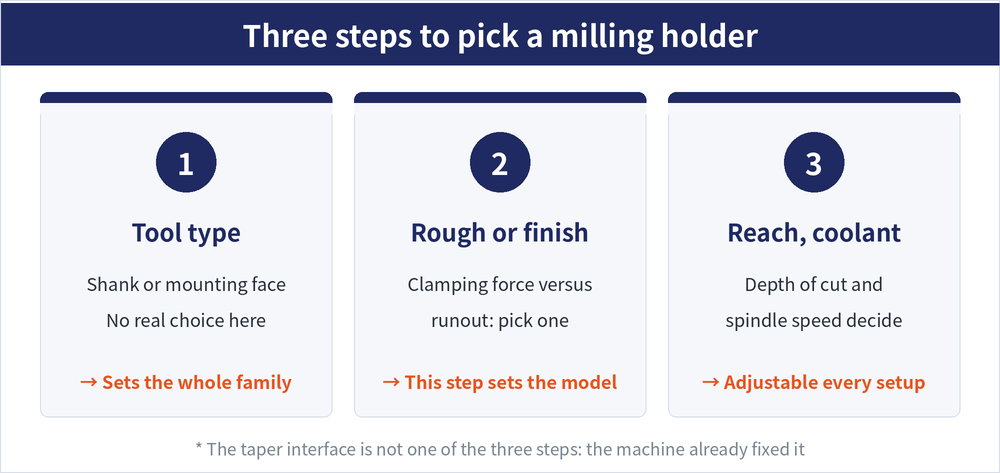
Fig. 1 The three selection steps for a milling tool holder. CNC57 summary.
| Step | What it decides | What it is based on |
|---|---|---|
| Step one | Holder family | The shank form or mounting face of the cutter |
| Step two | Clamping method | Roughing or finishing |
| Step three | Overhang, balance, coolant | Depth of cut and spindle speed |
2. Three Demands Milling Places on a Holder
In milling every edge cuts in and out once per revolution, so the load arrives in pulses. The cutting force also acts sideways, which makes the holder easy to push away.
| Demand | What shows up when it falls short | Where it is especially sensitive |
|---|---|---|
| Rigidity | Chatter, a regular pattern on the surface, chipped edges | Roughing, heavy depth of cut, longer overhang |
| Runout accuracy | Uneven load between edges, scattered tool life | Small-diameter tools, finishing, multi-flute cutters |
| Balance | Higher centrifugal force, heavier vibration | High spindle speed, long holders |
The table above gives general direction only; follow the catalogue or the relevant standard — not measurements taken by this site.
Runout is the radial deviation (TIR) of the cutting edge as the tool turns one revolution; for how to control it see Tool Runout: Effects and Control.
For judging chatter see Milling Chatter: Causes and Solutions, and for balance grades see Tool Holder Balance Grade and G Value.
3. Step One: The Cutter Type Fixes the Holder Family
| Cutter type | Matching holder | Key point |
|---|---|---|
| Solid end mill (cylindrical shank) | Collet chuck, milling chuck, shrink fit, hydraulic | All four grip a cylindrical shank; the difference is settled in step two |
| Face mill body, shell mill | Face mill arbor (shell mill holder) | Torque is carried by the end drive keys, not by friction |
| Indexable shoulder mill, shank-type button cutter | Side lock or collet chuck | If the shank carries a flat, go side lock |
| Small-diameter tools, finishing tools | Shrink fit or high-precision collet chuck | The lowest runout comes first here |
Follow the catalogue or the relevant standard; not measurements taken by this site.
For the end drive key specification of a face mill arbor see the Face Mill Arbor and Shell Mill Holder Guide.
4. Step Two: The Five Clamping Methods at a Glance
| Clamping method | Principle | Best suited to | Main cost |
|---|---|---|---|
| Collet chuck (ER and similar) | Swap the collet to cover a different shank diameter | Mixed low-volume work, general jobs | Extreme at neither end |
| Milling chuck | A thick-walled sleeve grips over a large area | Roughing, heavy metal removal | A bulky nose, poor for finishing |
| Shrink fit | The bore is heated to expand, then grips as it cools | Finishing, small diameters, slender reach | Needs a heating unit, tool changes are slow |
| Hydraulic | Oil pressure pushes a thin-walled sleeve into contact | Finishing where vibration is a concern | The highest unit price, and it dislikes heat |
| Side lock (Weldon) | A screw presses on the flat of the shank | Roughing where the tool must not be pulled out | A single-sided load that pushes the tool off centre |
Follow the catalogue or the relevant standard; not measurements taken by this site.
For collet tightening torque see the ER Collet Specification and Torque Guide, and for the differences between systems see Collet System Comparison and Selection.
5. How the Manufacturer Rates the Five Clamping Methods
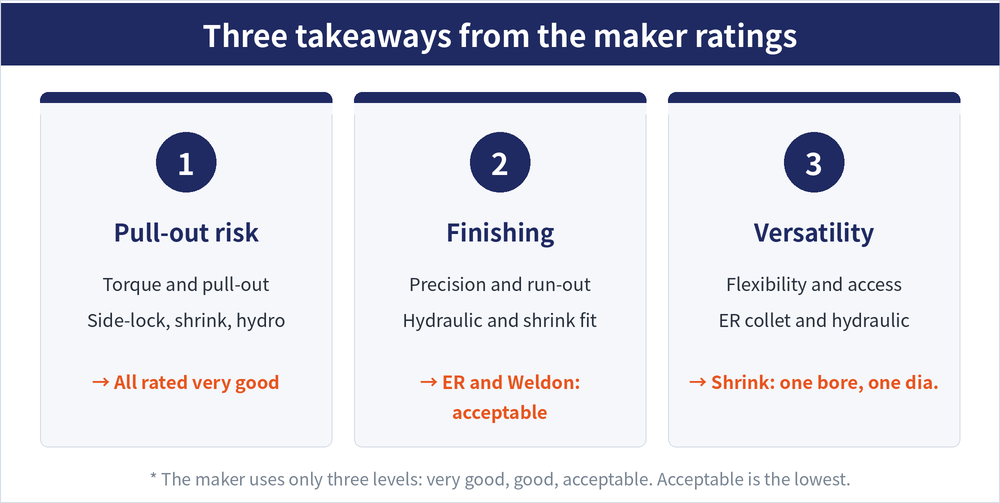
Fig. 2 Three takeaways from the manufacturer rating chart. CNC57 summary; the maker uses only three levels — very good, good and acceptable.
| Rating item | Hydraulic | Shrink fit | Milling chuck | ER collet chuck | Side lock |
|---|---|---|---|---|---|
| Pull-out security and torque transmission | Very good | Very good | Good | Acceptable | Very good |
| Easy handling | Very good | Acceptable | Good | Good | Very good |
| High precision and runout | Very good | Very good | Good | Acceptable | Acceptable |
| Flexibility | Very good | Acceptable | Very good | Very good | Acceptable |
| Accessibility | Very good | Very good | Acceptable | Good | Acceptable |
The grades are transcribed cell by cell from the manufacturer rating chart with nothing inferred. Original source: Sandvik Coromant Training Handbook.
The runout row deserves a second look: neither the ER collet chuck nor the side lock holder is a first choice for finishing.
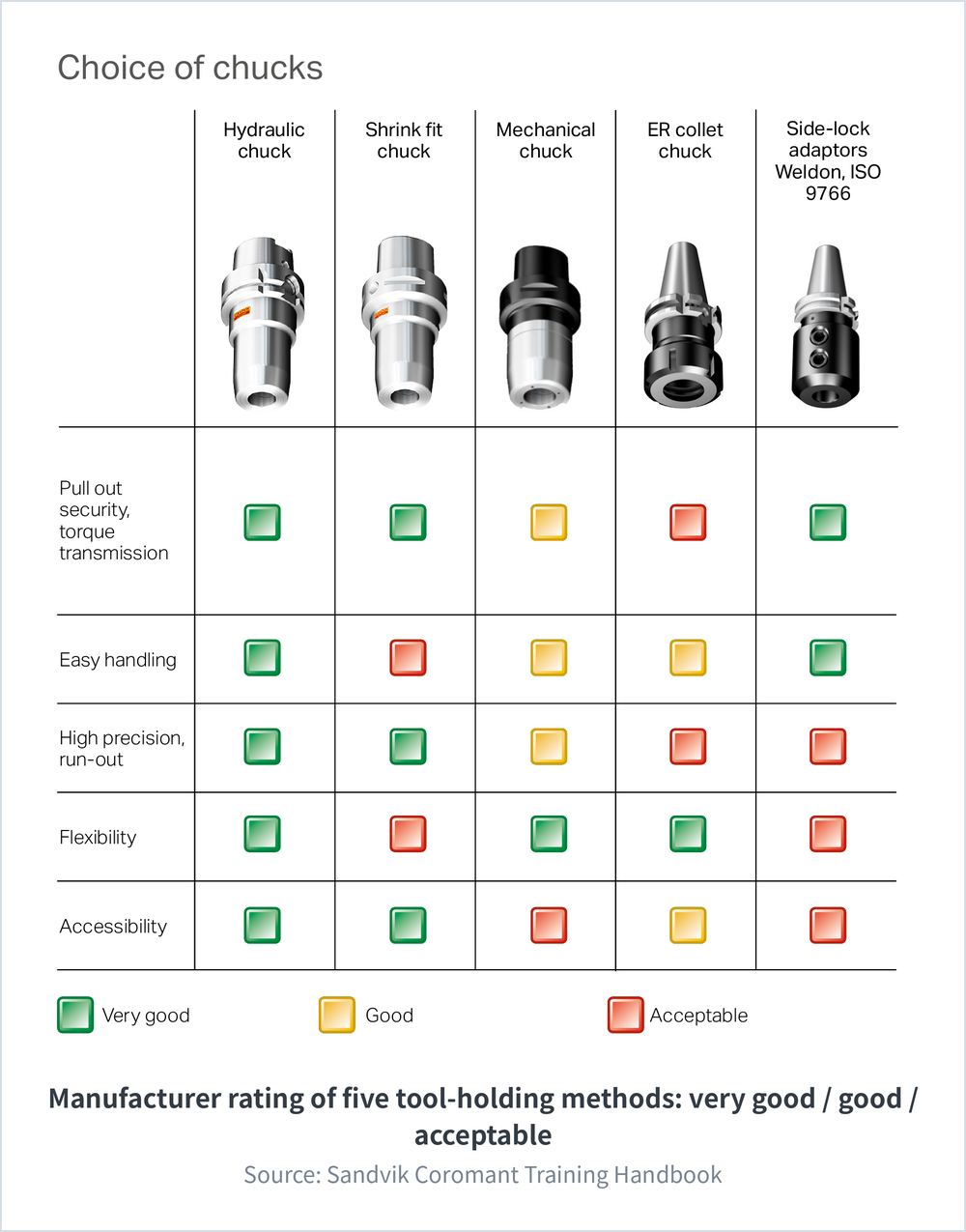
Fig. 3 The manufacturer rating chart for the five clamping methods; green is very good, yellow is good, red is acceptable.
6. The Manufacturer Selection Criteria
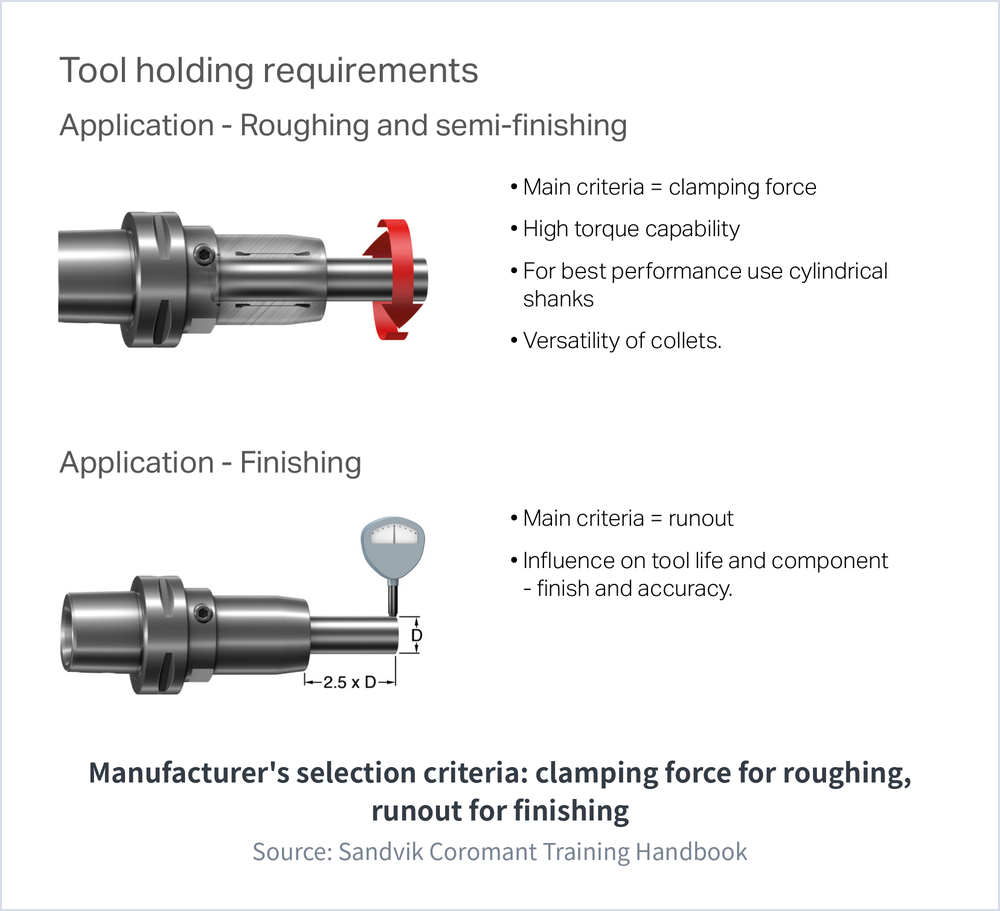
Fig. 4 The manufacturer selection criteria: clamping force for roughing, runout for finishing.
| Type of operation | First criterion | Usual choice |
|---|---|---|
| Roughing, semi-finishing | Clamping force | Milling chuck, side lock, hydraulic |
| Finishing | Runout | Shrink fit, hydraulic |
The maker adds one more rule: runout is read 2.5 tool diameters out from the holder face.
Readings taken on the same holder at different projection lengths cannot be compared with one another until the measuring position is matched.
Image source: Sandvik Coromant Training Handbook.
7. Step Three: Overhang, Balance and Coolant
Once the clamping method is settled, a few details still decide the outcome directly, and they can all be adjusted without changing the holder style.
| Decision | Direction | Why |
|---|---|---|
| Overhang length | As short as the job allows | Rigidity falls away quickly as the overhang grows |
| Dynamic balance | Only a concern at high speed | Any asymmetry in weight generates centrifugal force |
| Coolant supply | Coolant through the tool for deep pockets | External flood cannot reach that deep |
| Taper system | Match whatever the machine specifies | It was already fixed when the machine was bought |
Follow the catalogue or the relevant standard; not measurements taken by this site.
Where a slender overhang cannot be avoided, see the Anti-Vibration Tool Holder Guide; for the details of coolant through the tool see the Coolant-Through Tool Holder Guide.
For the differences between taper systems see the Spindle Taper Systems Overview. Of the four items, only the overhang can be adjusted every time a tool is set.
Last updated: 2026-07-31
8. Frequently Asked Questions (FAQ)
Q: Can one milling chuck cover everything from roughing to finishing?
For roughing, yes. For finishing and small-diameter tools, runout drags the result down: the manufacturer rates the milling chuck only good on runout, below shrink fit and hydraulic. Keep a second holder and split the work.
Q: Is shrink fit always better than a collet chuck?
Shrink fit has the edge on runout and pull-out security, but the manufacturer rates both its flexibility and its handling as acceptable only. One bore serves only one shank diameter, so in mixed low-volume work a collet chuck is more practical.
Q: Is there still a reason to use side lock (Weldon) holders?
Yes. The manufacturer rates them very good on pull-out security and torque transmission, and they remain common in heavy roughing. Runout and accessibility are only acceptable, so use something else for high speed and finishing.
Q: If milling chatters, does changing the holder fix it?
Shorten the overhang first, then confirm runout, and only after that consider moving to a hydraulic or anti-vibration style. For diagnosing the cause see Milling Chatter: Causes and Solutions.
For the full reading guide on this topic, see Hole Accuracy: A Complete Reading Guide.
This article is part of Tool Holders: The Complete Guide - One End Meets the Spindle, the Other Holds the Cutter; that guide shows how the whole topic fits together.