
S-Group Titanium & Superalloy Machining Guide: Ti, Inconel
Titanium and superalloys are group S (insert colour code: brown) in ISO 513. The manufacturer lists this group as the hardest of the six groups to machine.
The difficulty comes down to three things: heat stays at the tool tip, the surface work-hardens, and cutting force is high. Titanium adds high chemical activity and fine chips that ignite easily.
For an overview of the six groups, see ISO Workpiece Material Classification.
1. How the manufacturer describes group S
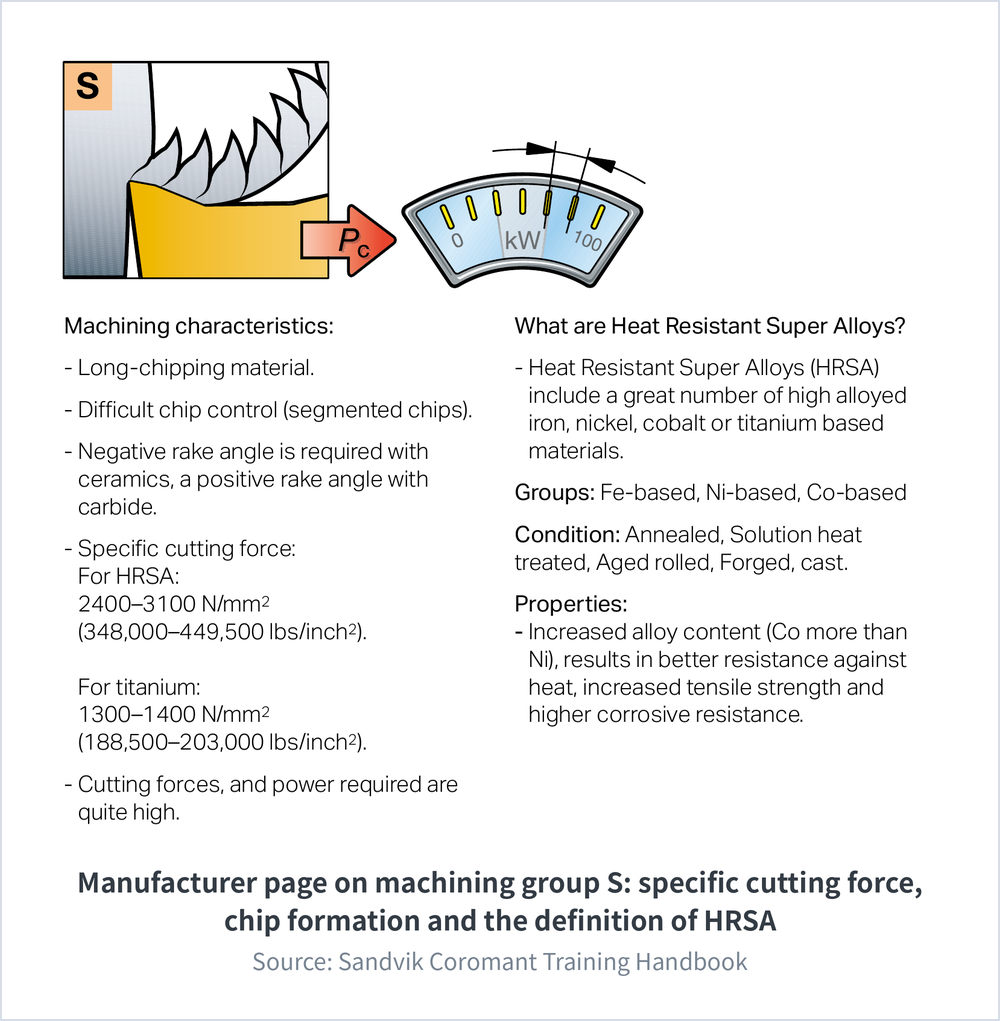
Fig. 1 The manufacturer's page on machining group S. Source: Sandvik Coromant Training Handbook.
This manufacturer page makes only four points: long chips, difficult chip control, picking the right rake angle, and high cutting force and power.
The chips are segmented, so neither chip breaking nor chip evacuation is easy to control. That is the most visible difference between group S and ordinary steel.
The rake angle has a clear direction: negative rake with ceramic tools, positive rake with carbide. The two cannot be swapped. See Ceramic Cutting Tool Guide: Choosing Between Alumina, SiAlON and Whisker-Reinforced.
High cutting force is not just an impression, it can be measured. The manufacturer lists the typical range of specific cutting force kc:
| Material | Specific cutting force kc | Imperial |
|---|---|---|
| Heat resistant super alloy HRSA | 2400–3100 N/mm² | 348,000–449,500 lbs/inch² |
| Titanium alloy | 1300–1400 N/mm² | 188,500–203,000 lbs/inch² |
The table above gives the manufacturer's typical ranges; follow the catalogue or standard. Not measured by this site.
The kc of superalloys is roughly twice that of titanium. At the same depth of cut and feed, the demand on spindle power and clamping rigidity is a clear step higher.
2. The manufacturer splits group S into six codes
The older version on this site split group S into titanium, nickel-based and cobalt-based only. The manufacturer's material codes actually run down to six:
| Code | Base |
|---|---|
| S1 | Iron-based alloy |
| S2 | Nickel-based alloy |
| S3 | Cobalt-based alloy |
| S4 | Titanium-based alloy |
| S5 | Tungsten-based alloy |
| S6 | Molybdenum-based alloy |
Heat resistant super alloy (HRSA) means a highly alloyed iron, nickel, cobalt or titanium-based material. The families are iron-based, nickel-based and cobalt-based.
The delivery condition is always stated: annealed, solution treated, aged and rolled, forged or cast. The same grade in a different condition is not equally hard to cut.
As alloy content rises (more cobalt than nickel), heat resistance, tensile strength and corrosion resistance all rise with it. For machining, those three rising together simply means harder to cut.
3. The three material types and their machining challenges
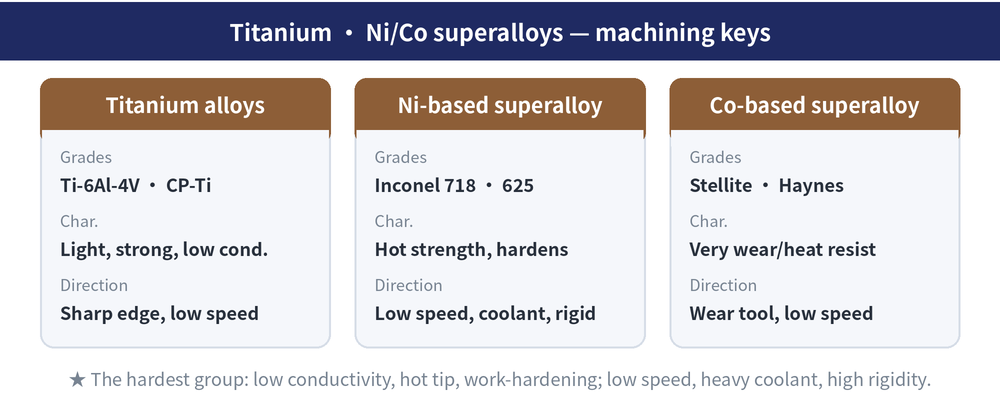
Fig. 2 The three material types and their tool direction. CNC57 summary.
| Type | Representative grades | Main challenge | Tool direction |
|---|---|---|---|
| Titanium alloy | Ti-6Al-4V, CP-Ti | Hot tool tip, prone to chatter | Sharp carbide, high-pressure coolant |
| Nickel-based superalloy | Inconel 718, 625 | Work-hardening, fast wear | Low speed, heavy coolant |
| Cobalt-based superalloy | Stellite, Haynes | Extremely wear-resistant, extremely hard to cut | Wear-resistant tools, stable low speed |
All three are difficult, but the difficulty sits in different places. Titanium alloys conduct heat poorly and have a low elastic modulus, so the focus is coolant and rigidity.
Nickel-based alloys have the worst work-hardening and tool wear. Low speed, heavy coolant and continuous feed all have to happen at the same time.
Cobalt-based alloys are close to the limit of machinability. Work mainly with wear-resistant tools at a stable low speed and do not chase productivity.
4. Three challenges and what to do
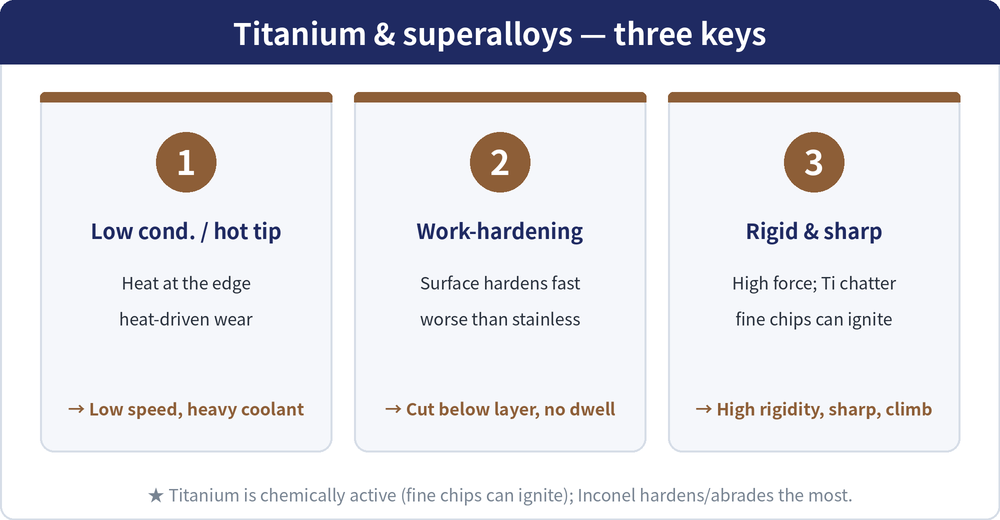
Fig. 3 The three challenges and the matching machining measures.
Challenge 1 — low thermal conductivity
Heat is not carried away and concentrates at the tool tip, causing thermal wear and plastic deformation.
→ What to do: lower the cutting speed and supply plenty of coolant. The job of the coolant is to protect the cutting edge, not to flush chips.
Challenge 2 — work-hardening
The surface of group S hardens faster than stainless steel, so the moment the edge dwells it is rubbing on the hardened layer.
→ What to do: cut below the hardened layer and keep feeding. Feed per tooth has to be high enough; you cannot protect the tool by reducing the feed.
Challenge 3 — high cutting force and chatter
Titanium has a low elastic modulus, so both the workpiece and the tool deflect easily.
→ What to do: rigid clamping, short overhang and a sharp cutting edge, with climb milling preferred. The full diagnostic order for chatter is covered in a separate article.
Titanium carries one more safety risk: fine chips and powder are flammable. Cool thoroughly, do not let fine chips pile up, and keep proper protection in place.
5. Tool grade and coating direction
Titanium alloys are cut mainly with sharp fine-grain carbide together with heavy high-pressure coolant. Coatings can be AlTiN or TiAlN, and uncoated tools are also used.
For nickel-based superalloys, ceramics (SiAlON) can be evaluated for high-speed stock removal in roughing, going back to carbide for finishing. When using ceramics, remember the rake angle has to be negative.
Cobalt-based alloys rely on wear-resistant tools cutting steadily. For the full choice of grades and coatings, see Cutting Tool Material Classification.
6. Cutting strategy and coolant
Low cutting speed plus heavy high-pressure coolant is what decides success or failure in group S. Settle the coolant first, then talk about spindle speed.
Coolant pressure is commonly split into a few levels in the industry: conventional 10–15 bar, medium pressure below roughly 50 bar, high pressure 70–80 bar, and ultra-high pressure 100–200 bar.
There is no single definition of "high pressure"; the actual levels follow the catalogue or standard.
The way you enter the cut also affects tool life. Use an arc entry to reduce shock and keep the edge under constant engagement conditions.
Tool rigidity has to be looked after all the way from the clamping end to the cutting edge. Short overhang, rigid fixturing and a sharp edge go together.
For specific vc and fz values, see End Mill Cutting-Conditions Calculation Guide.
Stainless steel has the same work-hardening problem, and reading them side by side makes it clearer: M Stainless Steel Machining Guide, H Hardened Steel Machining Guide.
7. Turning: why the tool nose chips so easily in titanium and superalloys
The two look alike when turned, but the causes differ: superalloys keep their strength at high temperature and work-harden badly; titanium conducts heat very poorly and concentrates the force on the edge.
| Item | What to do |
|---|---|
| What goes wrong | In superalloys both the rake face and the flank wear, and the edge can break away in large pieces; in titanium the cutting force is modest but concentrated, so the edge chips |
| Choosing the tool | K-grade carbide substrate, not P grades that contain TiC; small rake and large clearance angles for titanium |
| Starting conditions | Low cutting speed; for titanium pair it with generous depth and feed, since too light a feed leaves thin chips that can ignite |
| Coolant and chips | Flood coolant (high-pressure coolant is covered in the previous section); avoid chlorinated cutting fluids on titanium |
| Common problems | Checking flank wear alone is not enough; inspect the rake face too. If temperature cannot be brought down, consider cryogenic cooling |
For cryogenic cooling and laser assist see Two Assisted Routes for Difficult Materials: Cryogenic Cooling vs Laser Assist; for wear patterns see Tool Wear Guide: Chipping, BUE & Thermal Crack Solutions; for spindle-speed conversion see Turning Machining Formulas: Speed, Feed & Surface Roughness.
8. Milling: why tools die so fast in titanium and superalloys
In milling, heat and cutting force hit the same stretch of edge on every turn. The low conductivity and work hardening described above are spread out by reducing the engagement angle and varying the depth of cut, not just by slowing down.
| Item | What to do |
|---|---|
| What goes wrong | Full slotting builds up heat and work hardening; a fixed depth of cut rubs the same spot and causes notch wear |
| Choosing the cutter | Larger clearance angle; a negative land to strengthen the edge on difficult grades; mainly PVD coatings; ceramics and CBN do not suit titanium |
| Starting conditions | In titanium, with radial depth below one tenth of the cutter diameter, cutting speed can be 1.5-2 times the full-slot value (per the ISCAR titanium machining guide) |
| Coolant and chips | High-pressure coolant raises milling productivity markedly; prefer through-coolant tools |
| Common problems | Notch wear: vary the depth on each pass. Chatter in roughing: shorten overhang; in deep cavities, step through tools with different neck lengths |
One study on milling Inconel 718 found that reducing feed per tooth controls work hardening better than lowering spindle speed. For deep slots see Trochoidal and Dynamic Milling: Efficient Paths for Deep Slots; for heavy stock removal consider High-Feed Milling (HFM): Principle, Tools and Applications. Speed and feed conversions are in End Mill Cutting Conditions Guide.
9. Drilling: why titanium burns drills so quickly
Drilling shuts titanium's problems inside one hole: heat cannot escape, the margins pick up titanium, and the hole closes in and grips the drill. That last problem only appears when making holes.
| Item | What to do |
|---|---|
| What goes wrong | Heat concentrates at the edge and titanium sticks to the margins; the low elastic modulus lets the hole shrink onto the drill; the surface work-hardens |
| Choosing the drill | Narrower margins and more clearance to reduce rubbing on the wall; grind the web slightly off-centre so the hole cuts a little oversize; slightly less rake to keep the edge strong |
| Starting conditions | For Ti-6Al-4V with HSS drills, about 9-11 m/min cutting speed (typical values), far below steel; do not drop the feed below 0.05 mm/rev |
| Coolant and chips | Plenty of coolant, never dry; fine chips can ignite, so do not let them pile up at the hole or on the machine |
| Common problems | Drill gripped in the hole: narrow the margins and grind the web off-centre. Edge burning out: lower the speed, increase coolant, and do not reduce the feed further |
Too small a feed makes chips thin: besides rubbing on the hardened layer, they can ignite, so the drill cannot be protected by cutting the feed. The speed figures apply to titanium alloys only; for nickel-based heat-resistant alloys follow the drill catalog. For conversions see Drilling Parameters Guide; for point grinds see Drill Point Types by Material and Hole.
10. Tapping: why titanium and nickel alloys grip the tap
Titanium alloys and nickel-based superalloys both show strong elastic spring-back: the thread closes in after it is cut, grips the tap and drives the torque up. Nickel alloys add chips jamming between the teeth, both forward and in reverse.
| Item | What to do |
|---|---|
| What goes wrong | Spring-back grips the cutting edges and raises torque; heat stays at the tip and material welds on; in nickel alloys jammed chips chip the thread |
| Choosing the tap | More relief behind the teeth to help lubrication; left-hand spiral flutes for through holes to push chips forward; for titanium, a nitrided or TiCN (titanium carbonitride) coated tap |
| Starting conditions | A synchronised spindle with a minimal-compensation holder; aged titanium needs a lower speed than annealed |
| Oil and chips | Use a fluid with good lubricity; no sulphur-bearing fluid on nickel- or cobalt-based alloys, as it corrodes the part |
| Common problems | Tap seizing and breaking going in or backing out: use a dedicated tap with more relief. Thread undersize: use an oversize-class tap |
For superalloys keep the tap rake small (about 0°-3°) and the chip load per tooth at 0.015-0.04 mm; thinner than that, the teeth rub in the work-hardened layer. For regrinding and hole size in titanium see Tap Chipping and Breakage Solved by Regrinding; for RPM conversion see Tap Cutting Speed Guide.
11. FAQ
Why are titanium and superalloys so hard to machine?
Poor conductivity concentrates heat at the tool tip, work-hardening is severe and cutting force is high. The specific cutting force kc listed by the manufacturer is 2400–3100 N/mm², about twice that of titanium.
What should I watch when machining Ti-6Al-4V?
Sharp fine-grain carbide, low cutting speed and heavy high-pressure coolant, with rigid clamping and short overhang. Feed continuously without dwelling, and watch the fire risk from fine chips.
What is the key when machining Inconel?
Work-hardening and tool wear are the worst. Low speed, heavy coolant and continuous feed; for roughing stock removal, ceramics (SiAlON) can be evaluated.
Can titanium alloys be cut dry?
Not recommended. Titanium conducts heat poorly, the tool tip runs hot, and fine chips carry a fire risk. Use heavy high-pressure coolant to carry the heat and the chips away together.
Last updated: 2026-10-20
This article is part of Workpiece Materials: The Complete Guide - Name the Metal First, Then Match the Tool; that guide shows how the whole topic fits together.









